16-25/6/2023
Guide Zeki (Zekija) araratpeak.com
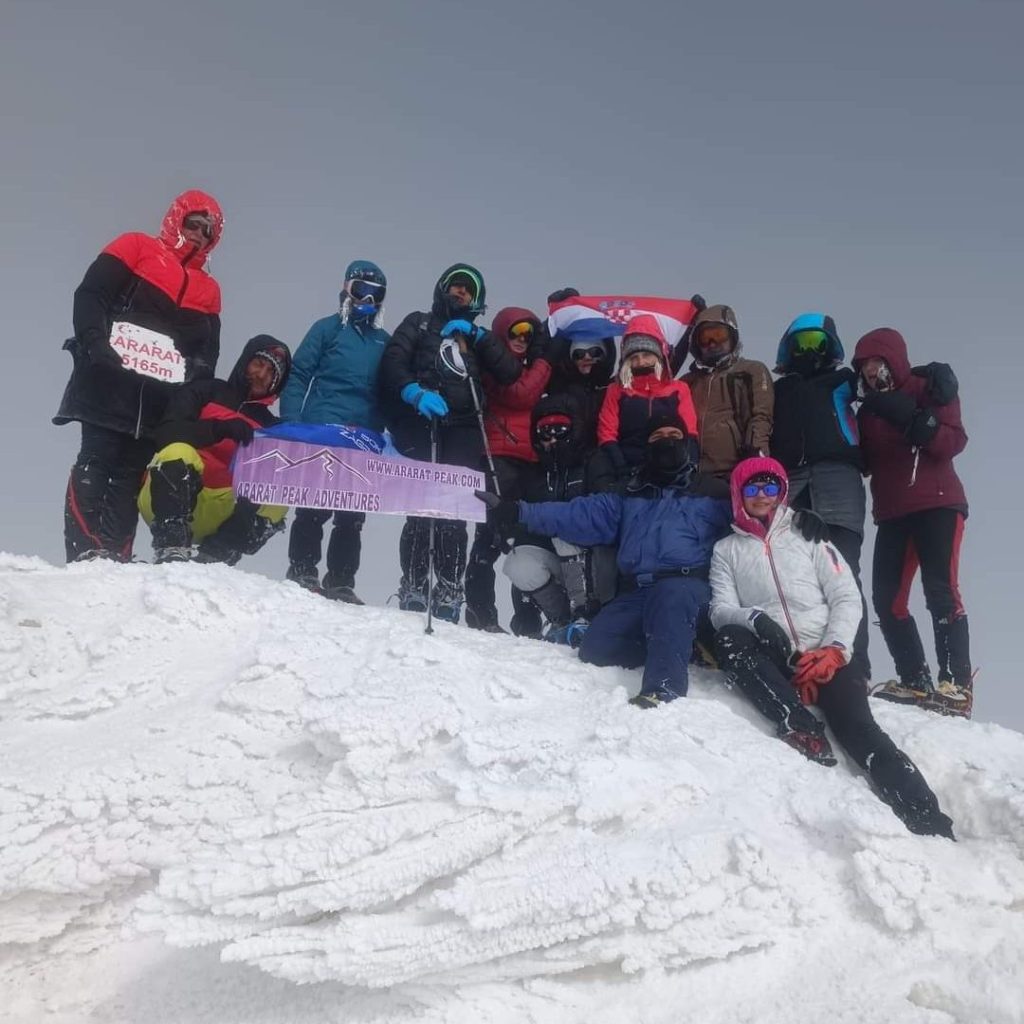
We separated from the earth – flew. We said goodbye to the closest and set off. We created a new family – eleven members. We wanted an adventure – we accomplished it!

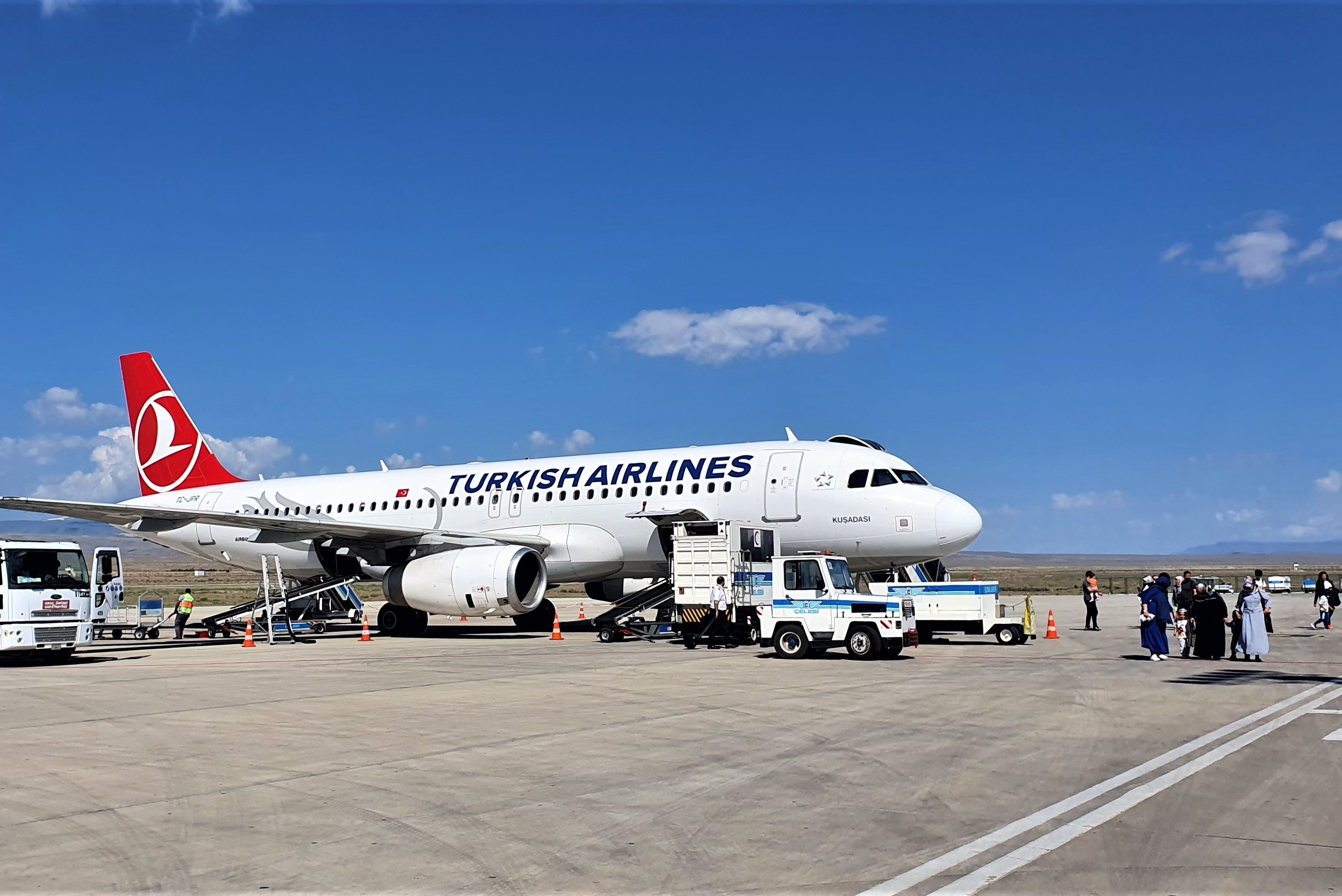
As stressful as it was to make the decision and buy a ticket, the journey itself was so easy and weightless. Dinner on the plane from Zagreb to Istanbul, breakfast on the next flight, and here we are in Igdir right on time at 8:40. I didn’t get a movie welcome with my name on a paper, but I got a warm hug, which is more than I expected. For the next 9 days our lives are in the hands of our guide Zeki, short for Zekija. The most important thing for now is that Zeki and his friend can overcome our much too heavy bags.
They drive us to the hotel in Dogubayazit, where we will leave our things, and then we will go to see where Noah’s ark ran aground in 2.500 BC. According to the Bible, Noah was a patriarch, 9th in line after Adam (the first man) known for his pity and righteousness which is why God decides to spare him after making the decision to destroy humanity because of sin. God order Noah to build a large boat in which he would place a pair of each animal species as well as his family: his wife, three sons and their wives.
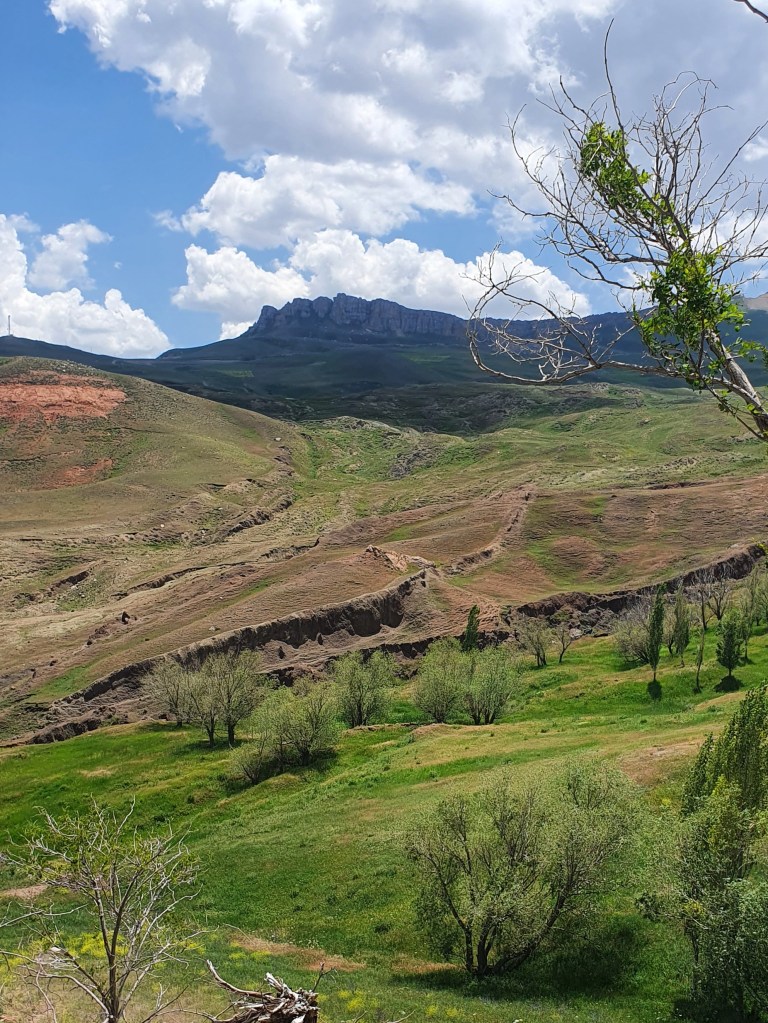
In 2010 a group of researchers claimed to have found traces of the biblical ship on Mount Ararat. The evidence is insufficient for now.
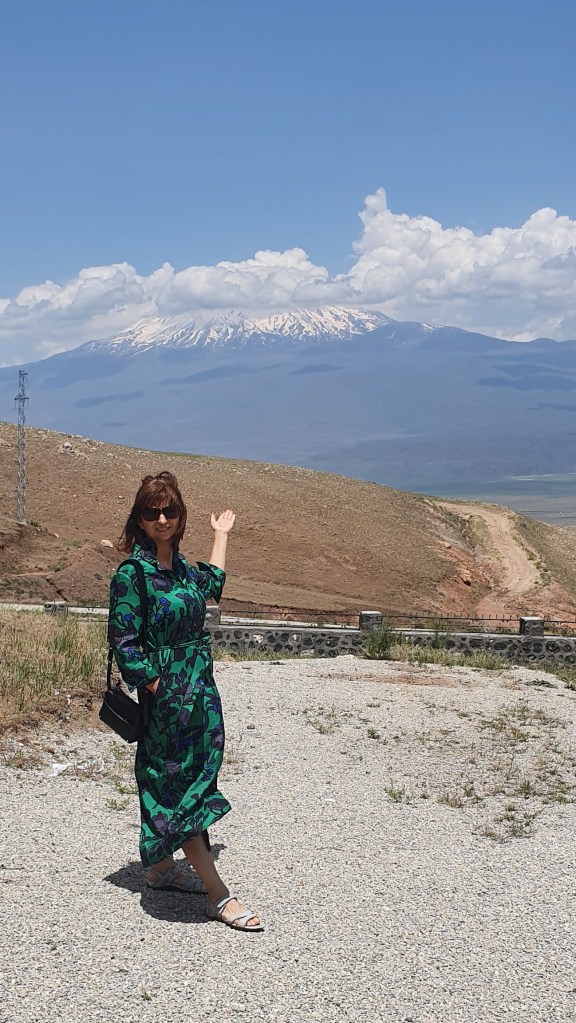
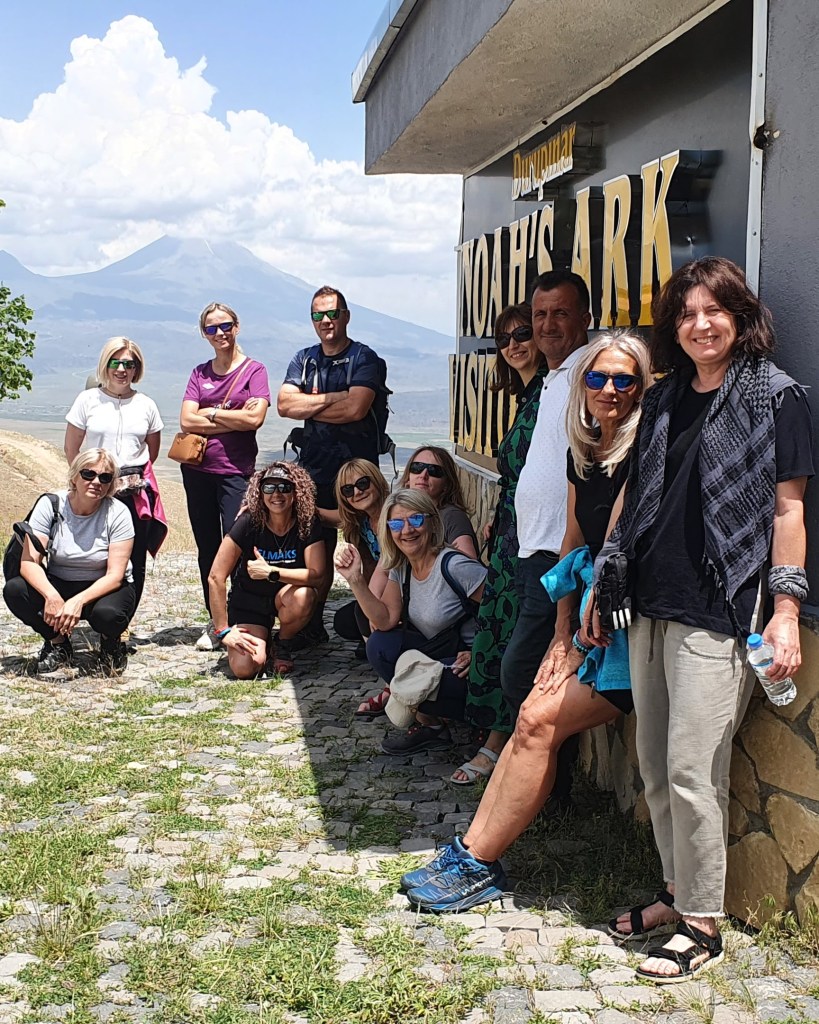
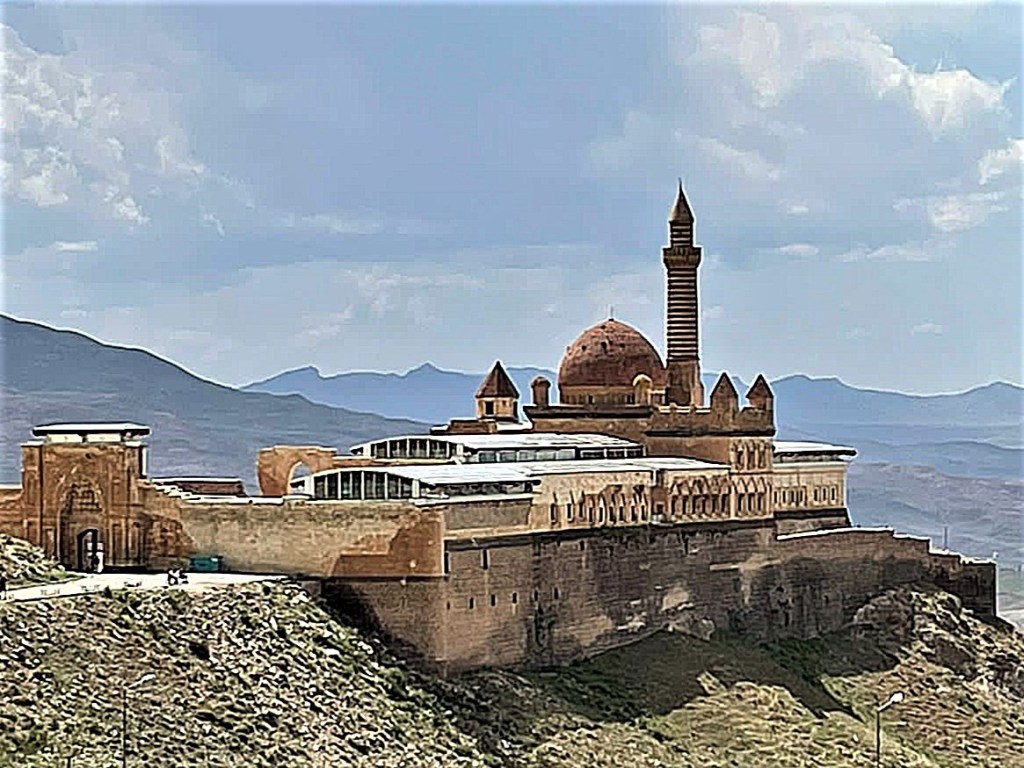
The city of Dogubayazit is located at the foot of Mount Ararat, which we see all the time, and 35 km from the border with Iran. We drive to Ishak Pasha Palace. It impressed me with it’s external architecture, it’s grandiosity and it’s integration into the mountain, but the labyrinth of basement rooms (dungeons) shows that awful things happened here.
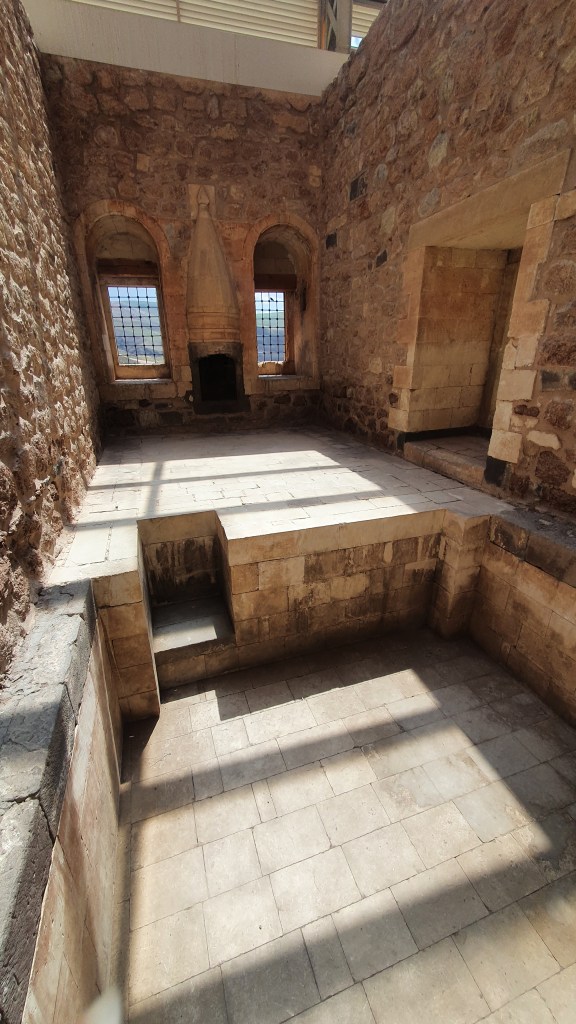
The construction is still fascinating and represents a return to the past. We go outside the walls.

The local mosque is located in the most beautiful place possible, and opposite of it is the cemetery.

“Are you up for a circular walk?”, asks Zeki. – “Yes!”, because: “Circular, always circular” is our motto. I already see that we will get on well! We passed by a family having a picnic on the grass. They were sitting on a blanket, grilling vegetables and meat. They invited us to join them. We declined their invitation, but we will always remember the generosity of Kurds.
“Would you like to have tea?”, our guide, with whom I have communicated so far only through messages, is full of good offers. Tea with a view served in glass smells on “more” and another round has arrived. He didn’t let us pay anything. I agreed only on the condition that we will pay for dinner. “We will see!”, smiles Zeki.

The restaurant he took us to blew us away with a rhapsody of taste and smells. First the appetizer – I mixed a spicy vegetable sauce with diced vegetables salad. “Do you eat like this?”, I asked Zeki. “No!”, he can’t believe it. The sauce is eaten with fresh out of the oven bread buns and the salad is for the main course. The main course is often quite spicy with a variety of vegetables. Served with ayran on the side – a dairy drink similar to yogurt, only thinner – something new for us. Many of us will start to love it very soon. Wine, beer and spirits are not offered.
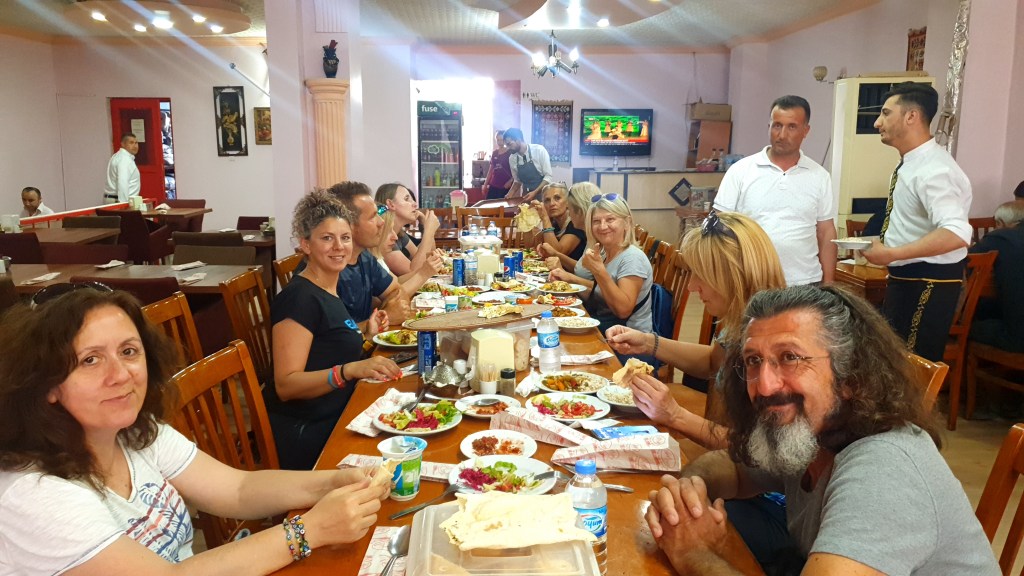
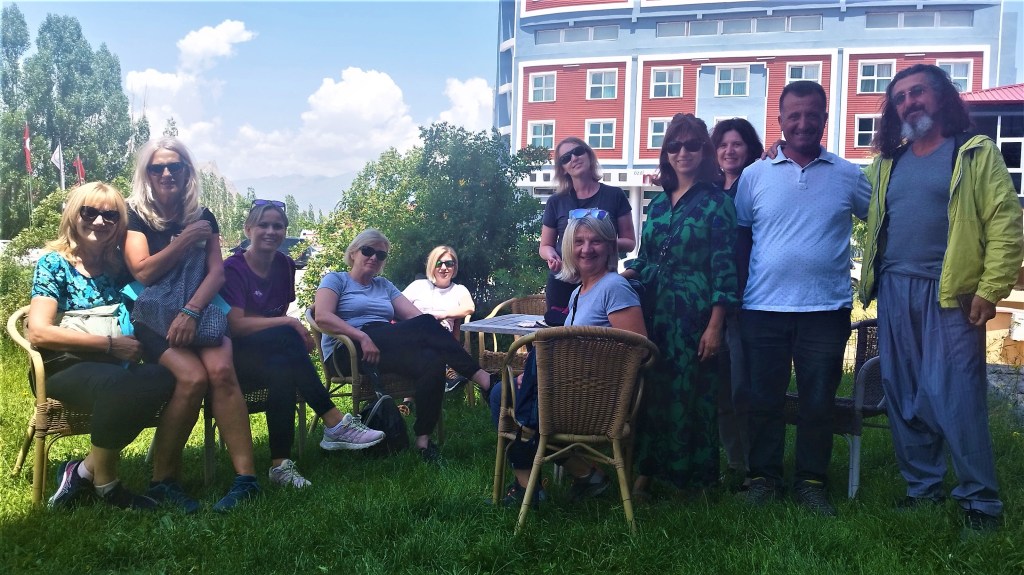
We haven’t tested how safe the city is for tourists because Zeki doesn’t leave us alone even for a moment. On the way to the hotel, he buys local apricots on the street. He washes them right away and we eat them before arriving at the hotel. They are delicious. In the hotel garden, we meet five Turks (two women and three men) with whom we will share the adventure to climbing Ararat – Insallah!/God willing!
The day ended with a strong downpour followed by a rainbow. The beautiful view captured from the hotel balcony. Our peak, the sleeping volcano, the only mountain in the world that stands alone. Two volcanos (Big Ararat 5165 m and Small Ararat 3896 m) connected by a path 11 km long, this path is not used.

7:00 After breakfast, we leave the hotel with our hiking equipment, which we can hardly lift off the floor. They drive us by van for one hour from the starting point of the ascent to 2.200 m above sea level. From here, our baggage – the hiking equipment, will be carried by horses, but there is another baggage we carry which no one can save us from. It is the worry, uncertainty and responsibility we carry with us. Will the weather be kind to us? There is a lot of snow this year and instead of melting, it continues to fall cruelly. Will our bodies be able to survive the high altitude and the low oxygen? What if something seriously goes wrong? Are we physically up to the challenge or not?
This load is much heavier for me to withstand than the 15 kg of hiking equipment.
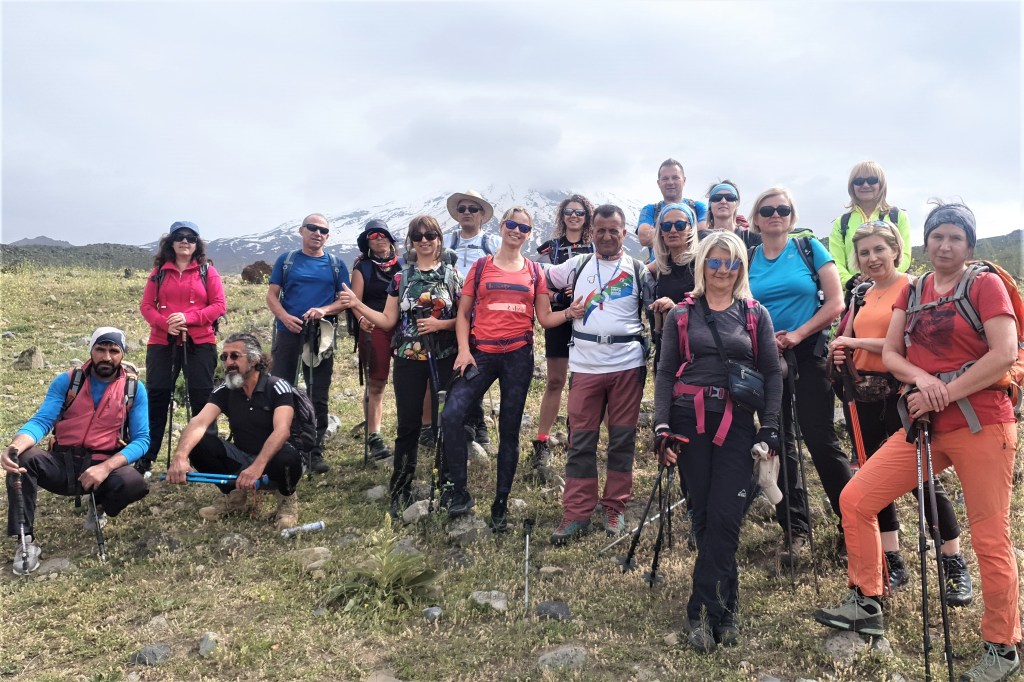
Known as “Mother of the World”, it was climbed for the first time in 1829 and until then it was believed that only Noah stood on the top and no one else had been there.
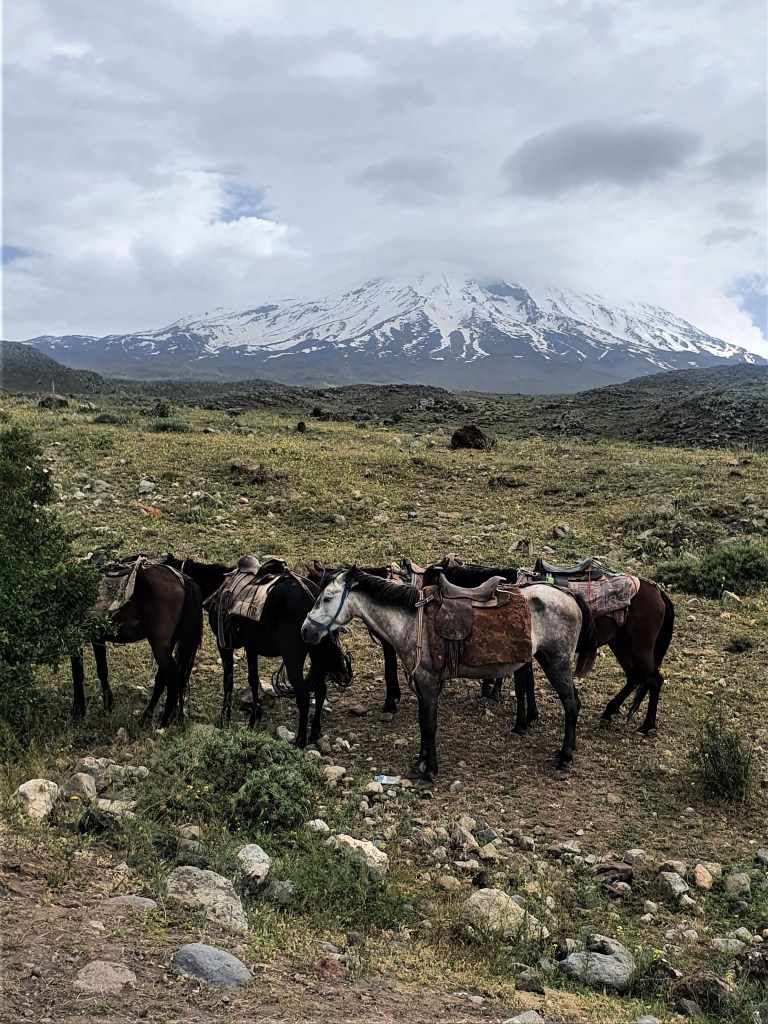
9:30 Our luggage and food for the next four days will be carried by the horses. We feel bad for the horses, but this is the only way.
With the first step, as if by a press of a button, Zeki changes his dynamic movement into a movement mimicking slow motion. I have to control myself not to rush. The slow and steady steps will take us to the heights.
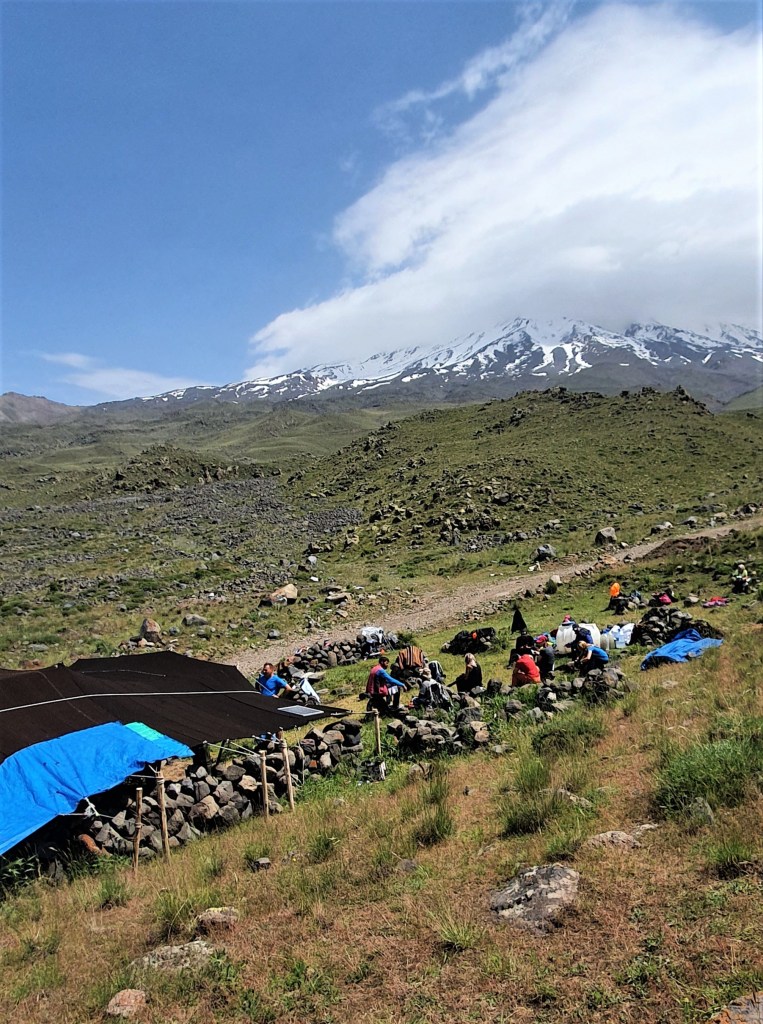
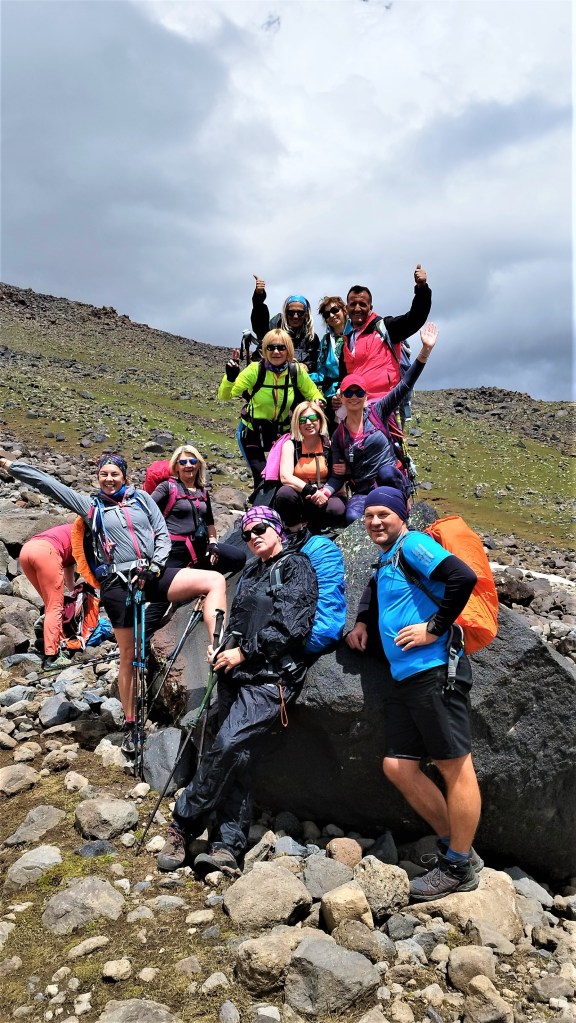
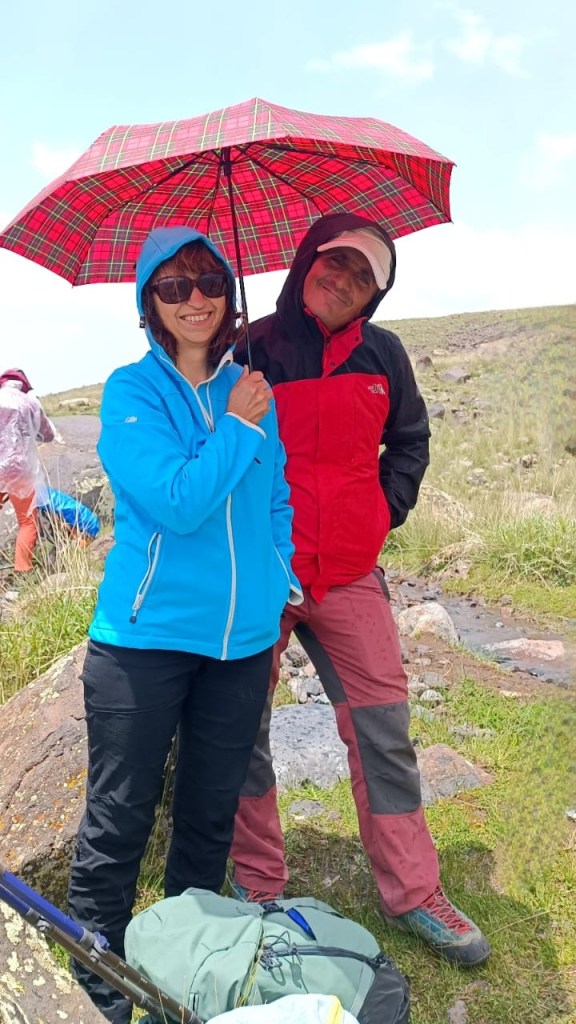
I would be lying if I said that nature is fascinating. The strongest eruption of the volcano was in 1840 and destroyed everything on it’s path. This is why all sides of the mountain are treeless. Low stones stick out from modest grassy areas, flowers are very rare, the sky is grey and far ahead the peak of Ararat is still guarded by the clouds from yesterday. That is why we are here – cheerful and energetic, in slow motion. Tea, coffee, Coca-Cola in the bar by the road and dancing. Yes, our guide Zeki plays Kurdish music and we dance in a circle. Maybe we got the steps wrong, I do not now, but after we finished our dance, the rain started to fall. I’m tired of putting and taking off my raincoat, so I take out my umbrella. “I have never seen an umbrella on Ararart!”, says Zeki and here he is!
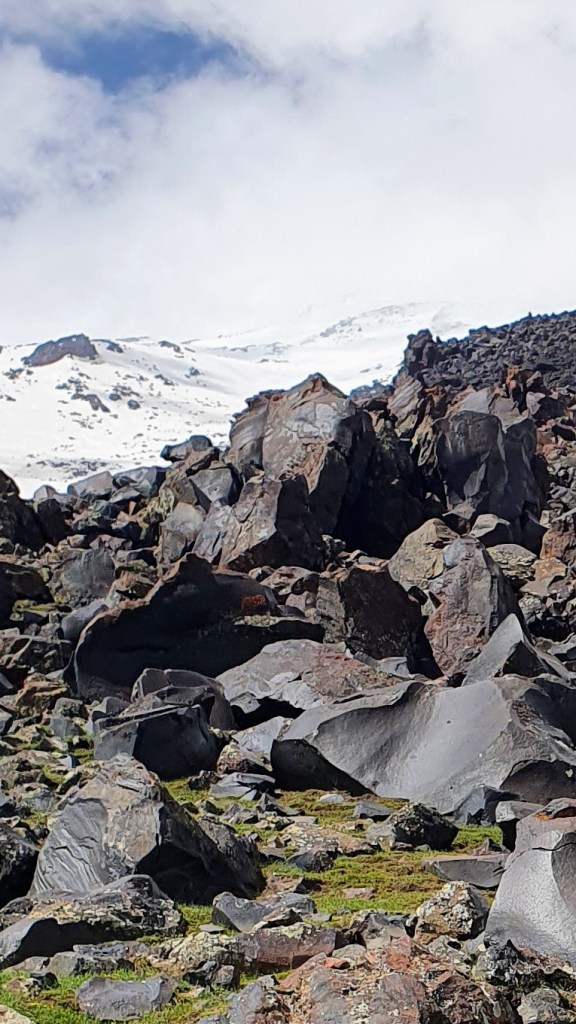
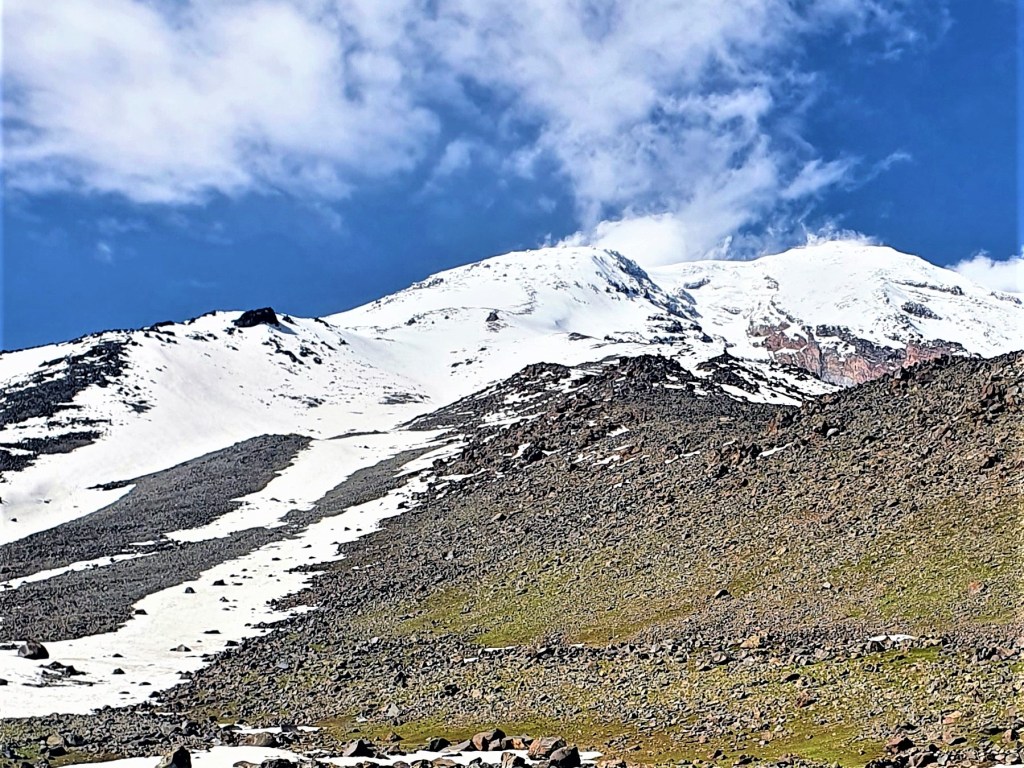
14:00 With that slow step and without speeding up our breathing we climbed to camp #1 at approximately 3.400 m. I was happy that we could choose between a large tent for ten and small one for two. The five of us from Croatia and five from Turkey filled the big tent. I go on a walk to look around. We are surrounded by snow. The volcanic rocks here are huge, picturesque and surprisingly warm. The sky cleared up and revealed the peak of Ararat to which seemingly soft hills lead. Are they really as soft as they appear? I sat on a stone listening to the silence, looking into the distance and absorbing the warmth of the stone. I hear my name being called from a distance. It’s lunch time.

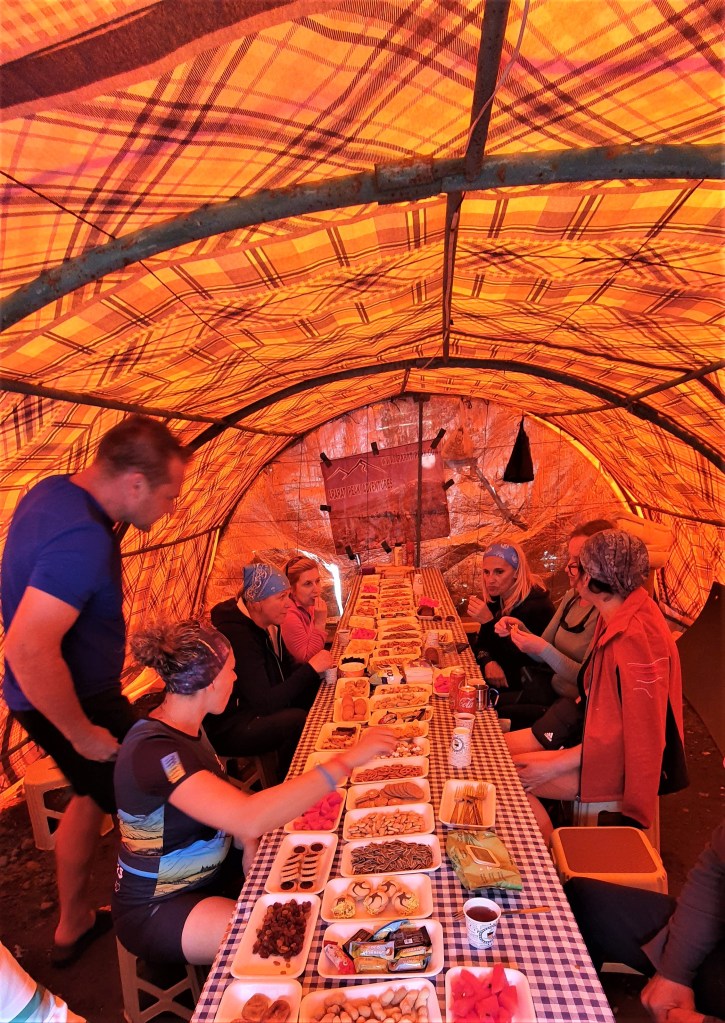
In the tent there is a long table full of fresh and dried fruits, salty and sweet snacks and tea, everything in abundance. Joy and togetherness.
And now what? Music and dance. First we slowly move our hips to the Kurdish rhythm. I would have been better off had I renewed my belly dancing skills instead of physically training for this adventure. There are many hidden talents in our group though. Everything rang and laughter roared when Božana wrapped a Turkish lady’s scarf with ducats around her waist and shook her hips.
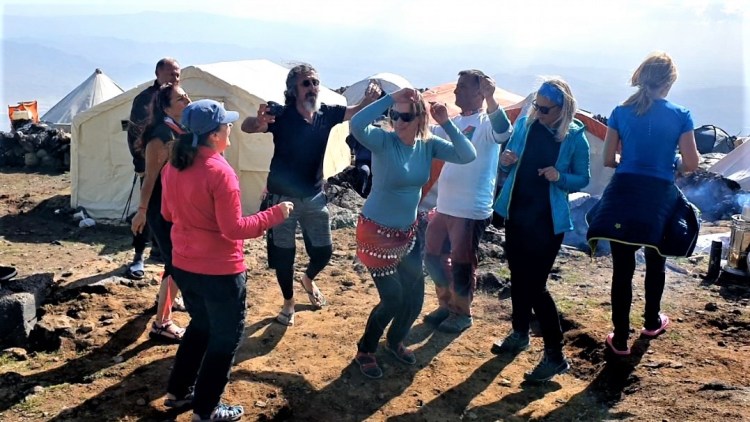
We are moving to the second podium. It is Zumba time. Marina is a Zumba instructor and we practice her choreography. Oh, yes boys and girls, Croats, Turks and Kurds. We all try to imitate Marina’s seductive virtuous movements, hoping to look at least half as good as her. Only Tihi, her husband, gets away with filming, and keeps the situation under control.
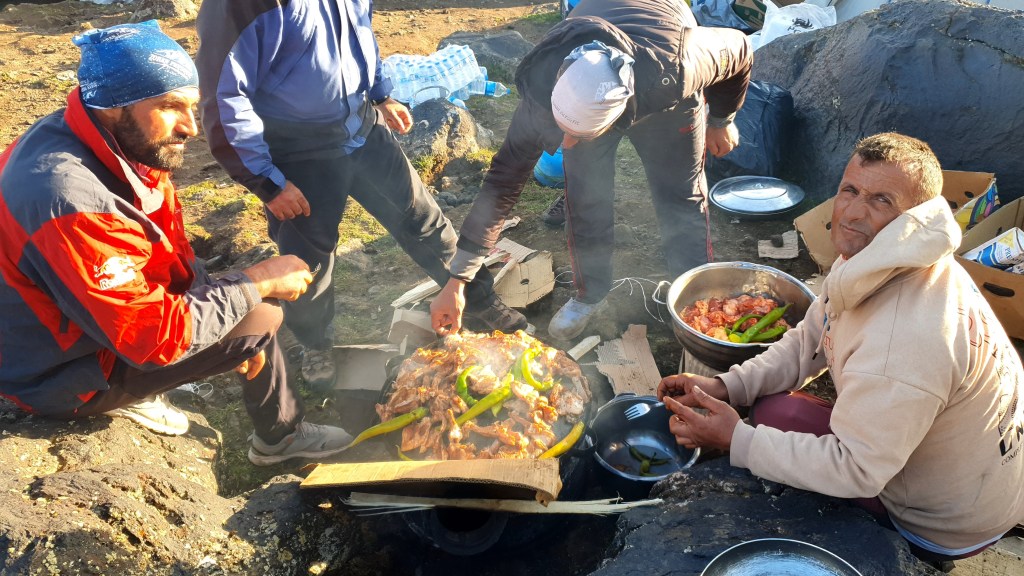
Our guides are also cooks, waiters and entertainers, all as needed. They are barbecuing right now. We also have a chef for more delicate meals. The horses returned to the lowlands accompanied by a young man and three huge dogs. I ask Zeki “Why dogs?” – “To protect the horses.” – “From whom?” – “From wolves.” I could’ve lived without that information. “Wolves have to eat, you know Anica, that’s the circle of life.”, he explains to me. I don’t think I will be going to the toilet at night.
After a delicious, abundant dinner we stay to hang out in the tent. Meeting new people is a great treasure. I give out sleeping pills. They are not obligatory. A colleague from Turkey is a sick,, she hasn’t eaten anything, altitude sickness takes over her. Tihi deals stronger substances.
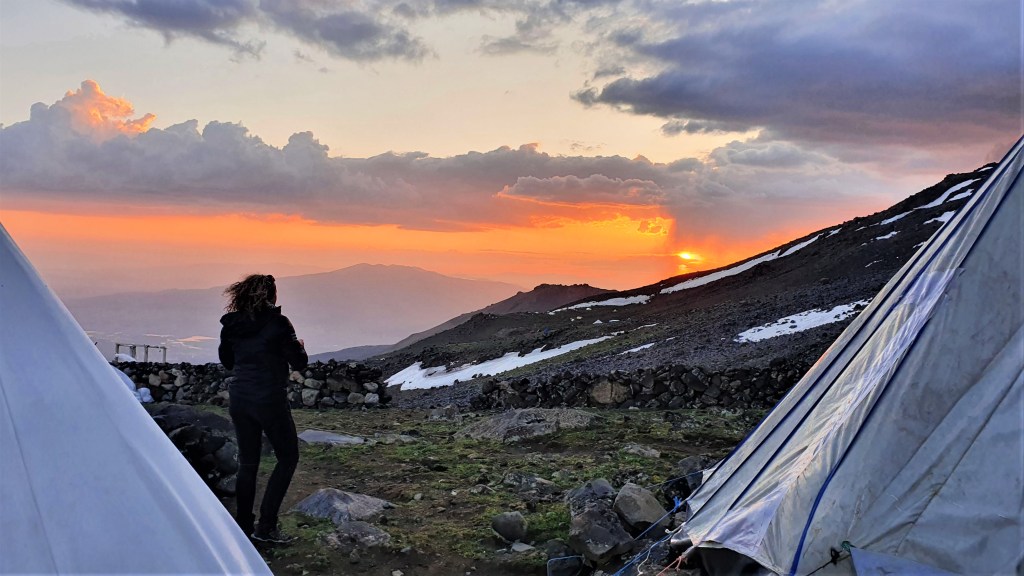
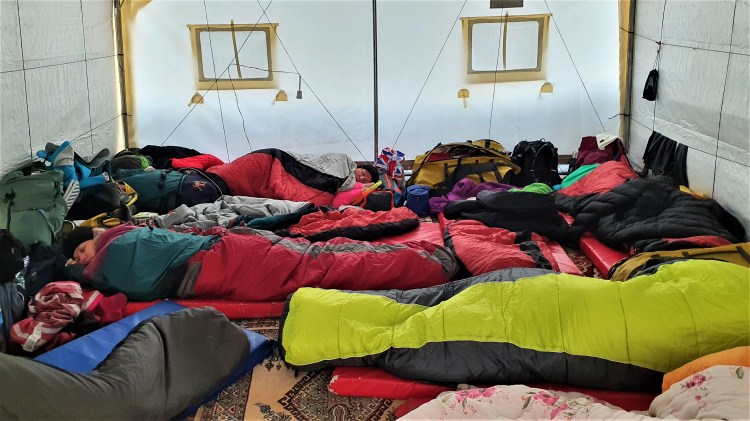
We go to sleep. Well, that is not quite true. The truth is we crawl into our sleeping bags and stay still. We listen to the wind roaring and battering the tent walls. My eyes follow the bent, human-shaped silhouettes as they exit the tent, my guess is to vomit. I wait for sleep to come to my eyes or morning to dawn, so I can get up. “Did you hear the rain?”, my friend asks me at dawn, “I didn’t, I must have fallen asleep.”
Acclimatization climb from 3.400 m to 4.200 m and return to the first camp
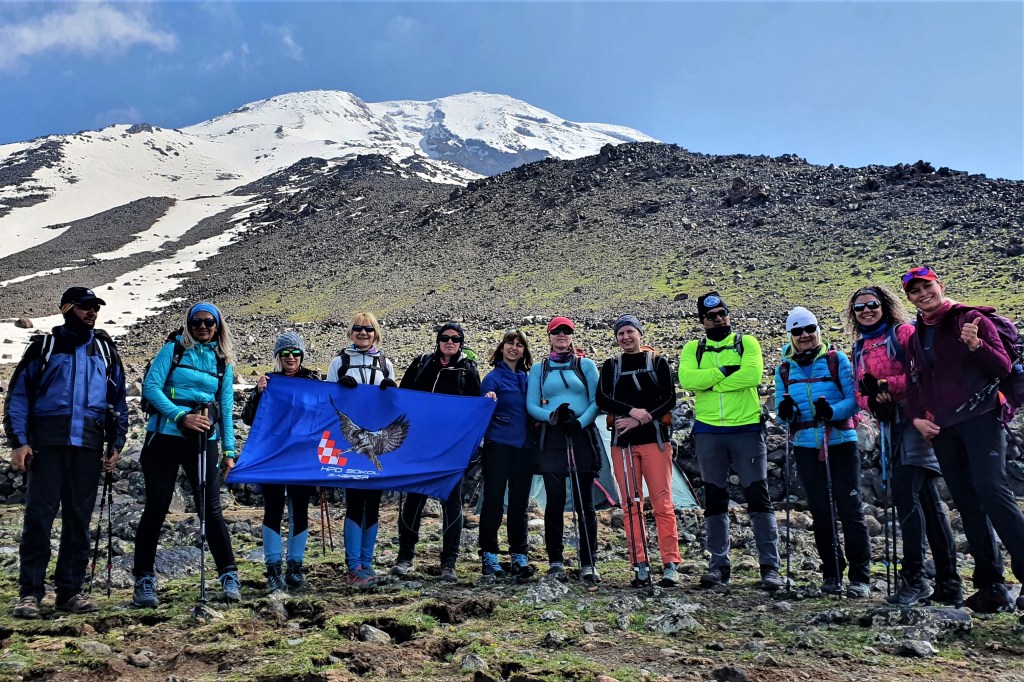
After breakfast we take the launch packet (fruit, two sweets and juice) and around 9 a.m. we start the acclimatization climb to 4.200 m. With the same slow step, we tread lightly and surely progress toward our goal. The stone path is replaced by a snow path. Breathing is harder and deeper and breaks are more frequent.

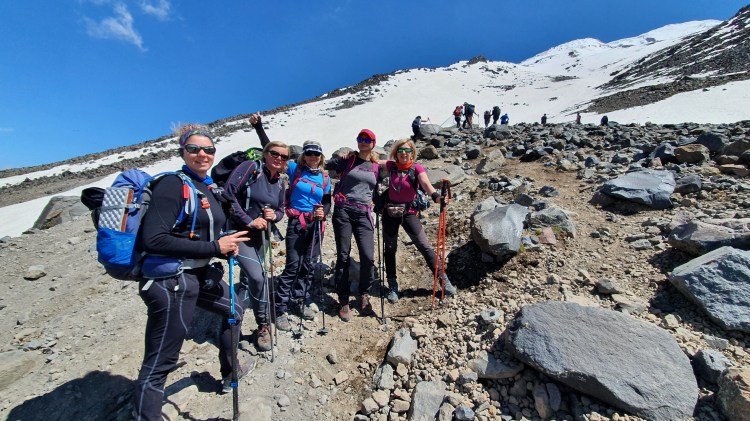
We passed the camp at 3.800 m, where we will move tomorrow. We reached today’s goal of 4.200 m. Here is Zeki’s camp which we can’t use because it is coverd in snow. “Can we go a little further?”, we ask. “Yes, if you want!”, our guide is surprised. For many, Triglav (2.864 m) is the highest peak they have ever climbed, a few of us have climbed Atlas in Maroco – Toubkall (4.164 m), two of us Monte Rosso, only Neva has climbed two peaks above 5.000 m. I’m already higher then I have ever been. How am I going to handle that height tomorrow? Like Scarlett O’Hara in the film Gone with the wind, I say to myself: “I’ll think about it tomorrow…”

11:30 Dancing in the wind against the coldness and moving down. I ask Zeki how many times he was on the top. 439 times. “So with us will be your 440th time?” – “Yes, insallah!”
After dinner, I take out Uno cards for a few of us and Bellot cards for Ismail’s team. We love when Neva wins the most because her joy is a source of joy for all of us. Not everyone feels great, some can’t eat, some suffer from headaches and dizziness – all symptoms of altitude sickness.

Acsent to the 2th camp
It is a busy morning in the first camp. We pack all our personal belongings on the horses, as well as the tents, pots and food. The sky is clear, the weather is warm and the top of Ararat is cloudless. “If only tomorrow’s weather would be like this!”, it is the wish of each of us.
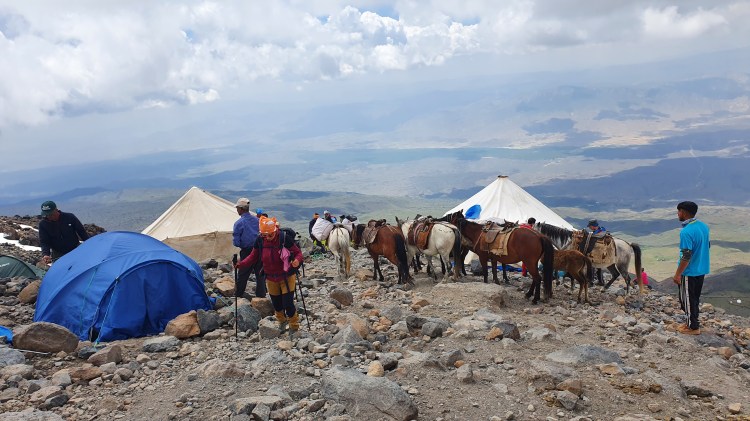
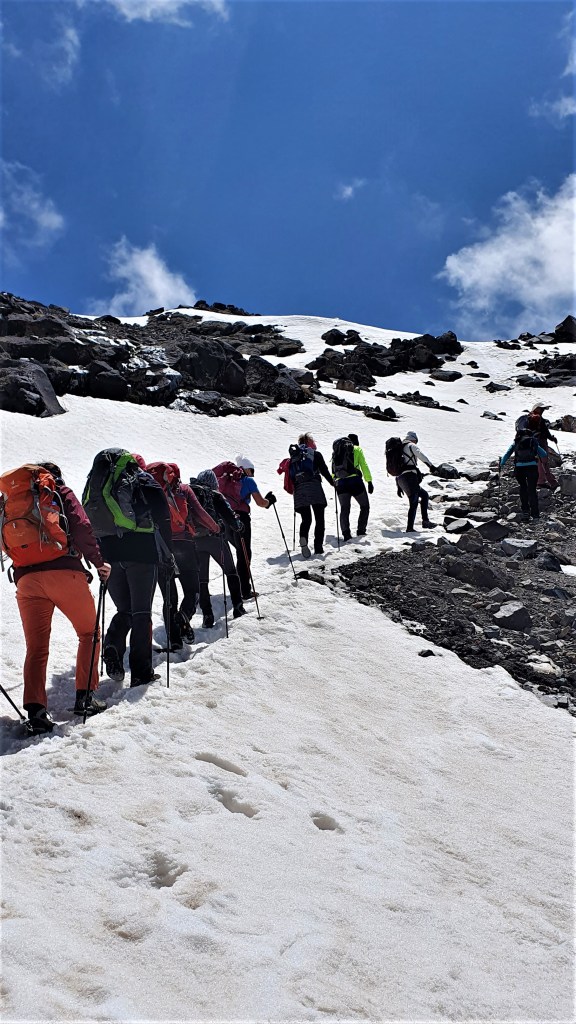
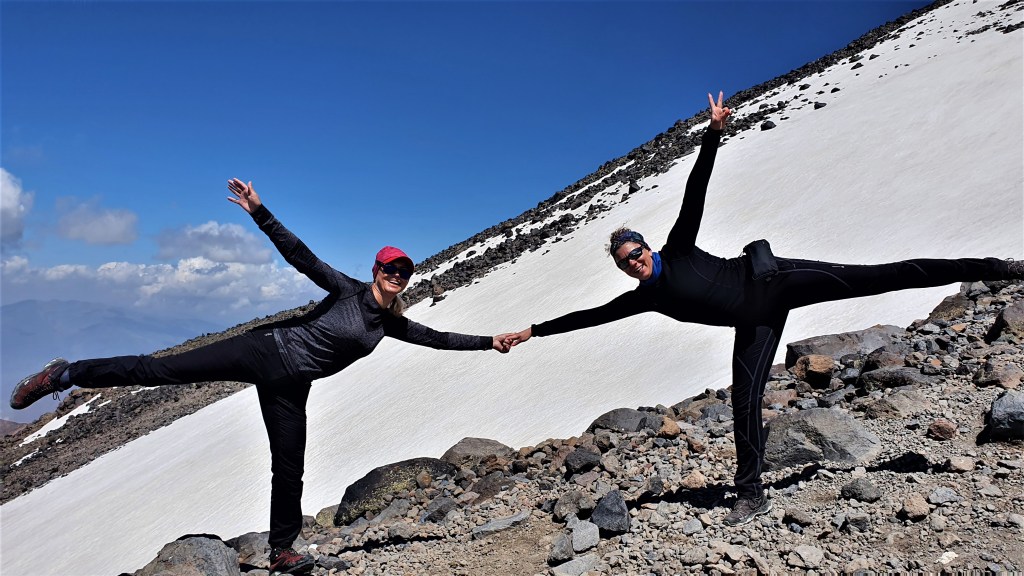
It took us two hours to reach the camp at 3.800 m. We put up tents – those who can, help. “I built you a house!”, Alexandra is proud. Lili and Marina practise the pose for the top. Good thing I took the picture when I did.
I don’t enjoy the snacks any more, I do drink the tea because we have to drink a lot of liquids for the oxygen in it. Zeki seriously and firmly gives us further instructions: “Now we will take a break until dinner. Rest is important for acclimatization. Dinner is at 4 p.m. Then we will go to sleep until 11 p.m. The breakfast will be served and at midnight we will continue our ascent. You must have crampons in backpack. If someone forgets them, I will turn him back around. Is everything clear?” – “Clear.”
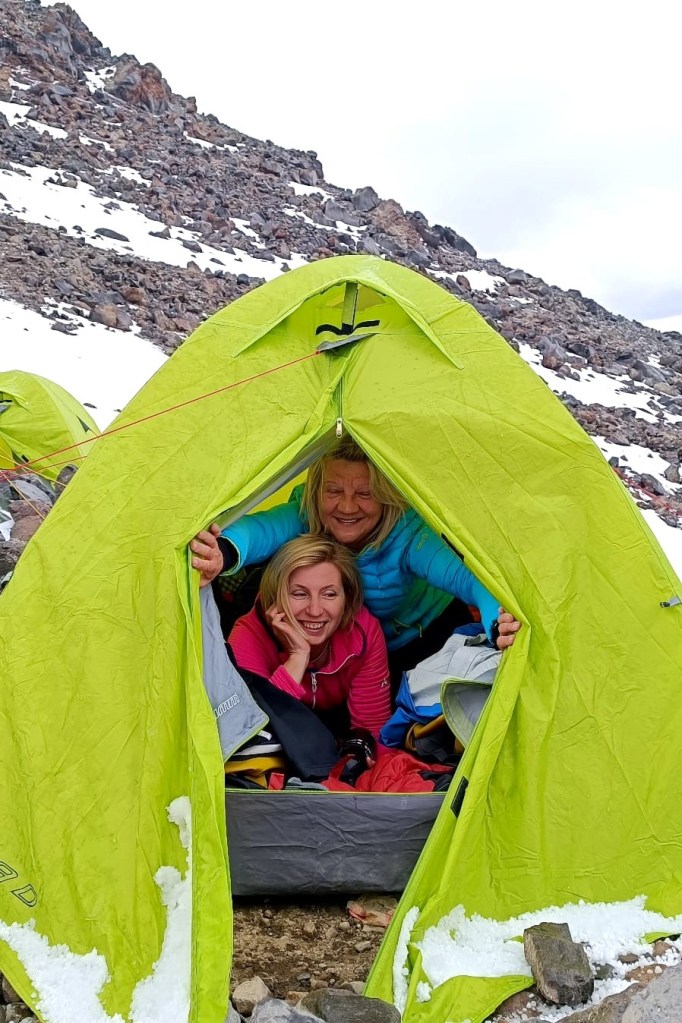
We prepare our things for the ascent, pack our backpacks and calm down to try to get some sleep. Suddenly there was a very loud thunder and soon enough we were buried in a white veil of snow.
Dinner at 4 p.m. I eat pasta, and pasta eats me. I ask to prepare hot tea for all of us for ascent. They will fill our thermoses, the cook promises. We go to sleep from 5 p.m to 11 p.m. It is gonna be a crazy night!
21.6. 2023. Climbing to the top
Getting up at 11p.m. Somewhere below, the lights of the city Dogubayazit shine brightly. We all gather in the tent for breakfast. Time flies. We put on our backpacks, the guides fix our hats, coordinate us. “Let’s go!”, says Zeki, blowing his whistle softly and taking a good known slow motion step. I’m going behind him. Well, if this is not a crazy night, I don’t know what is!
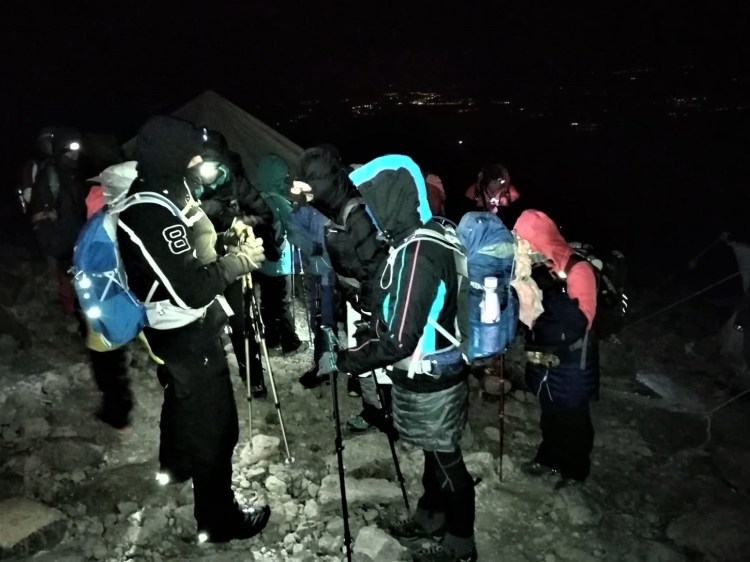
We walk slowly. It’s hot for us even though it’s -10°C (supposedly feeling like -18°C), and we have to stop shortly to take off some of our clothes. I recognise the camp at 4.200 m from yesterday. I take a deep breath of the icy air, an equally deep exhale, a sip of water. From time to time I look up and illuminate the hill in front, actually, above us, and comment: “I guess that’s why we are walking in the night – so we can’t see how steep it is.”
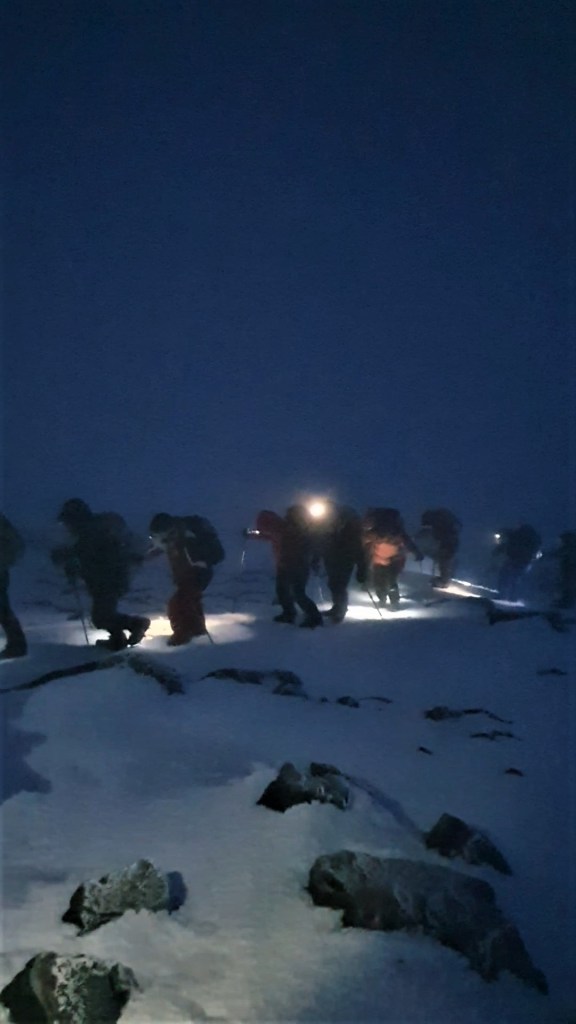
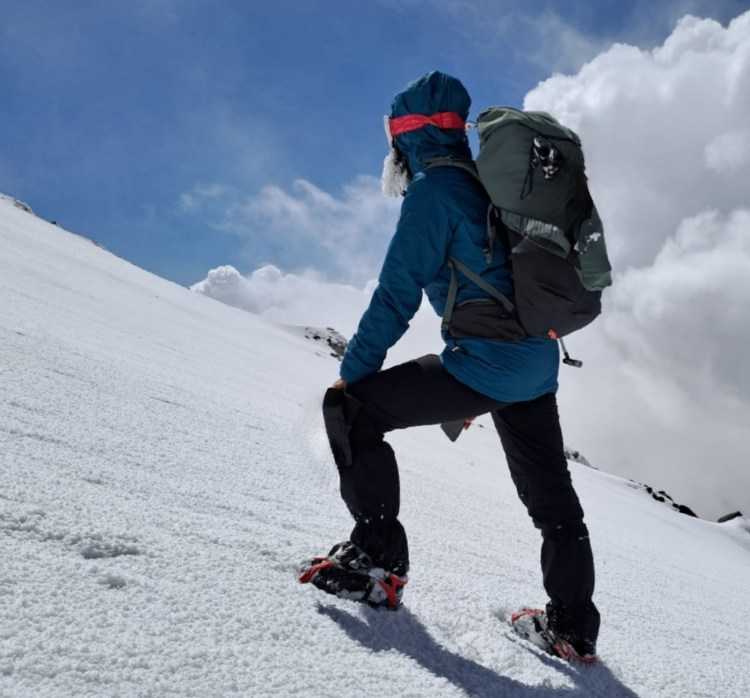
“Now we will put on crampons.”, decides first man. We have one guide in the middle of our group and one at the end. They help our team with crampons. “Go ahead so we can get on the same level.”, says Alex. “There is nothing straight anywhere.”, Tihi answers quietly. “Who said that this is an easy climb tricked us a bit.”, we will be angry later, “or the summer climb is much easier.”
Daylight chased away the night. Everything is white. Tihi regularly informs us about the altitude. We are making progress. We stop to drink a cup of tea every hour. “Just a little more and it will be smoother.”, Zeki tells me and I pass on to cheer up the others.
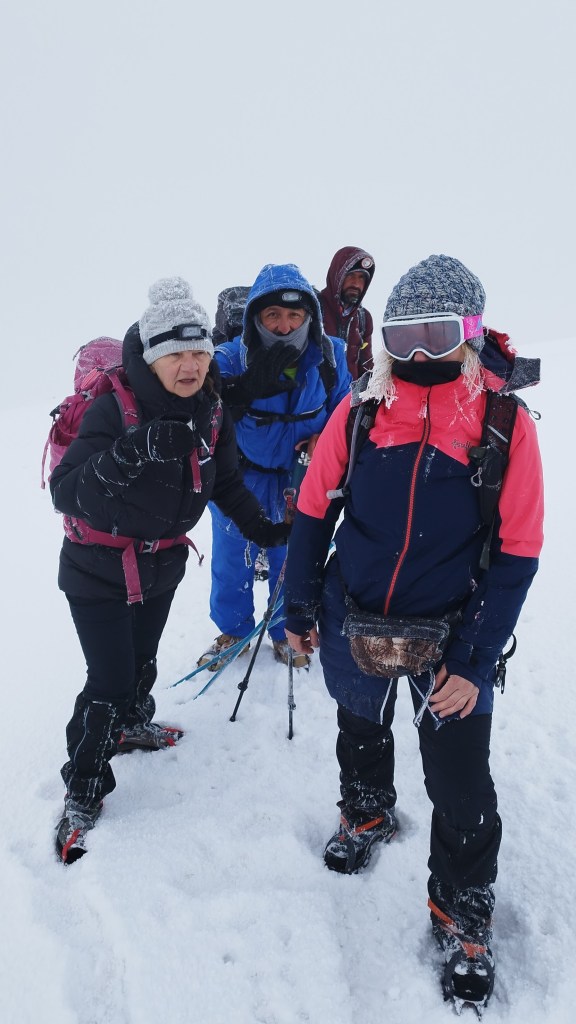
We stop, actually we stand a lot and my hands are freezing. Zeki takes off my gloves and warms my hands with his breath. I can’t believe it! The other guide takes off his gloves and puts them on mine. Yes, you can walk like this!
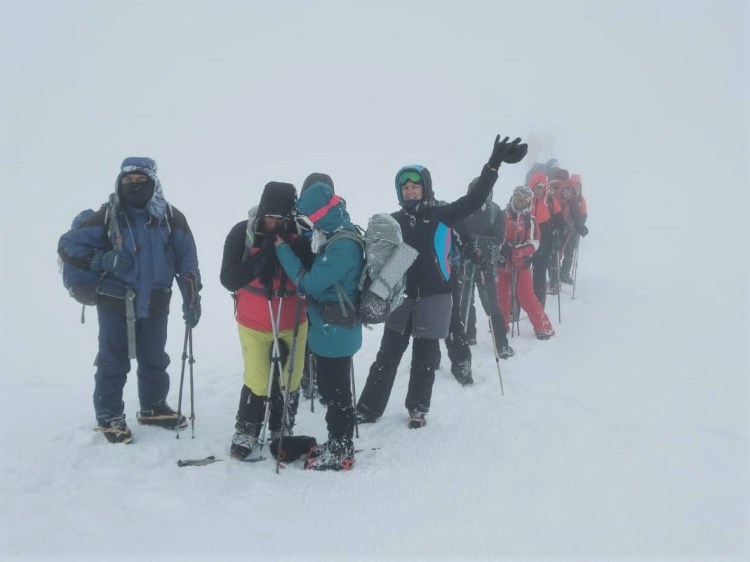
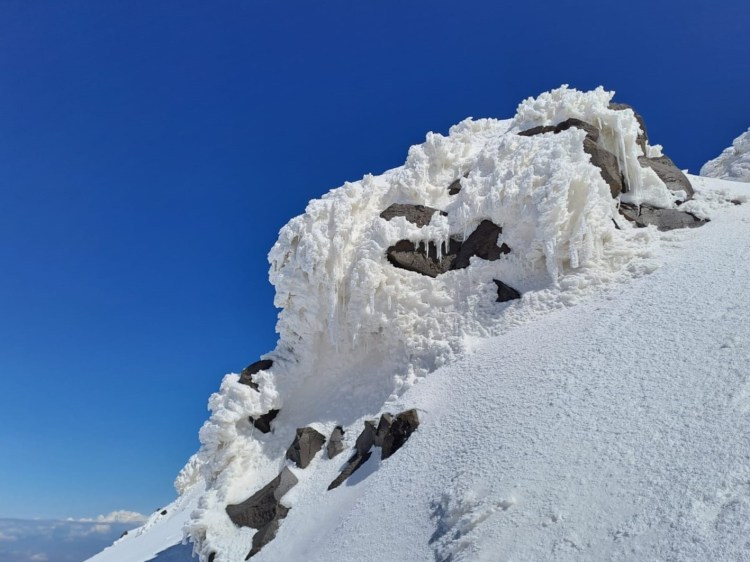
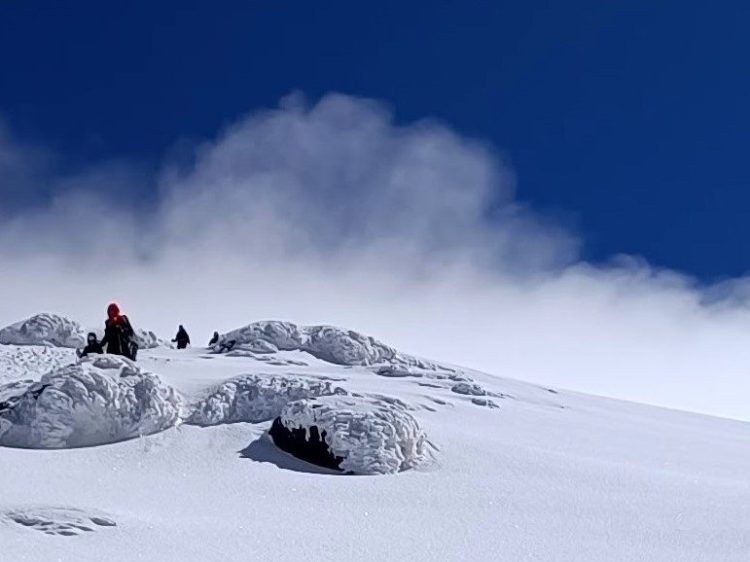
A group of mountaineers got lost and joined us. Only the best guides can find the right way to the top in this white ensemble of clouds and snow. The peak is not in sight.
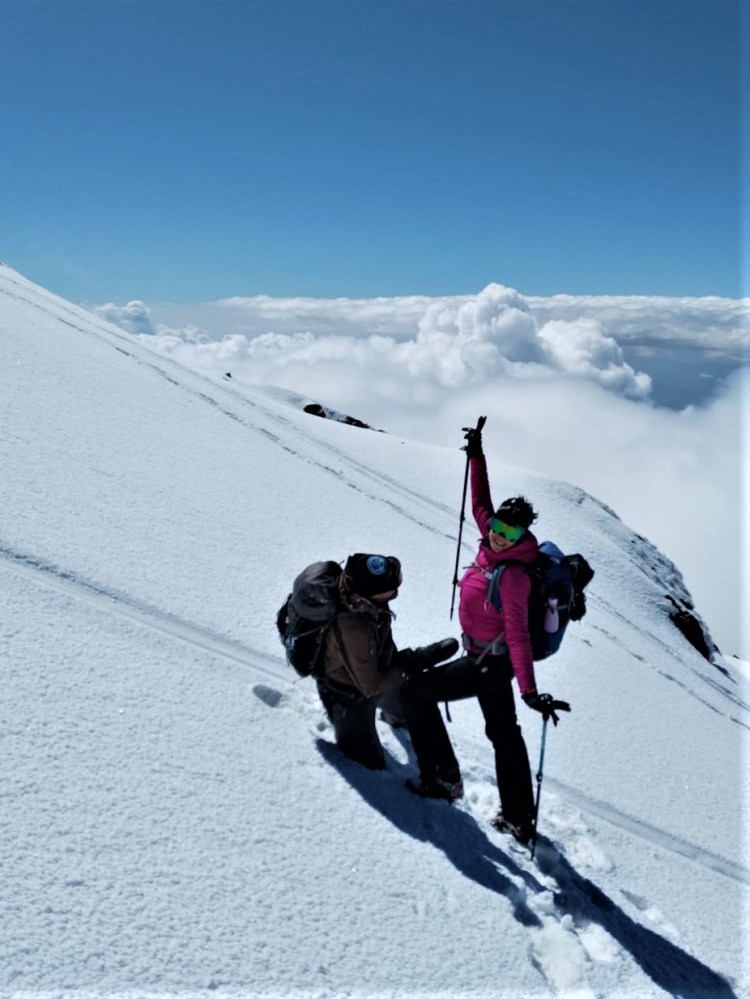
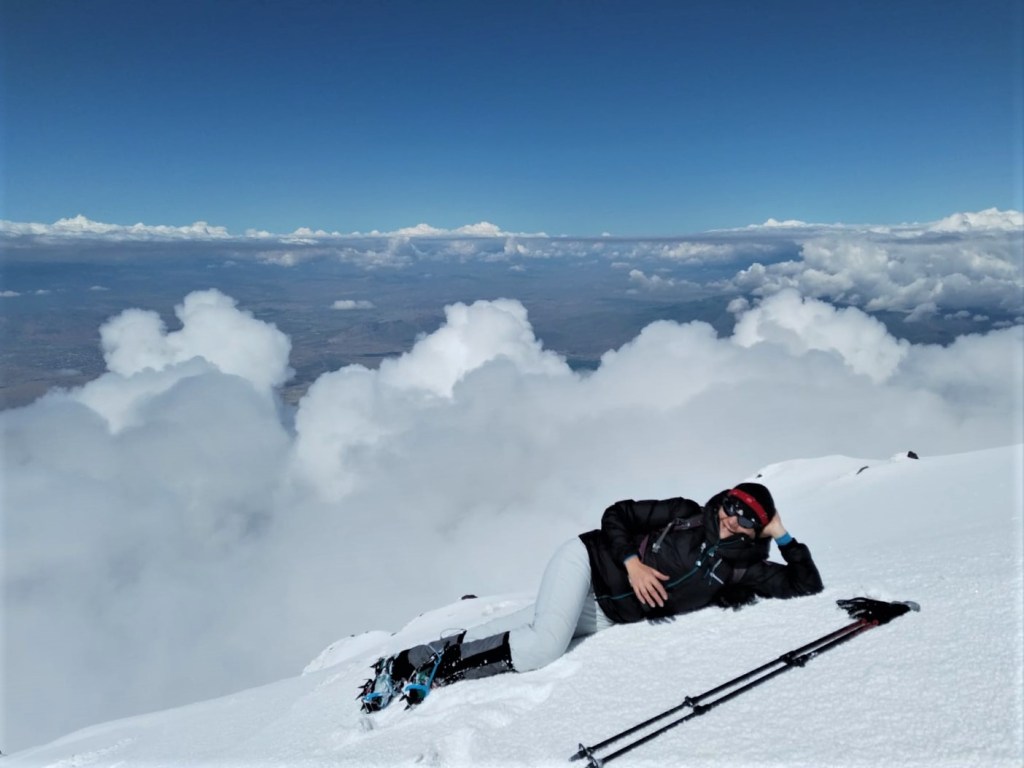
We overcome the last 150 m of the ascent with even slower short steps and one by one we step on the top in disbelief: “Is it possible that it’s over? Did we make it?”
“Congratulations!”, Zeki hugs me with a big smile. I take out my phone for a selfie, I know he likes taking them.
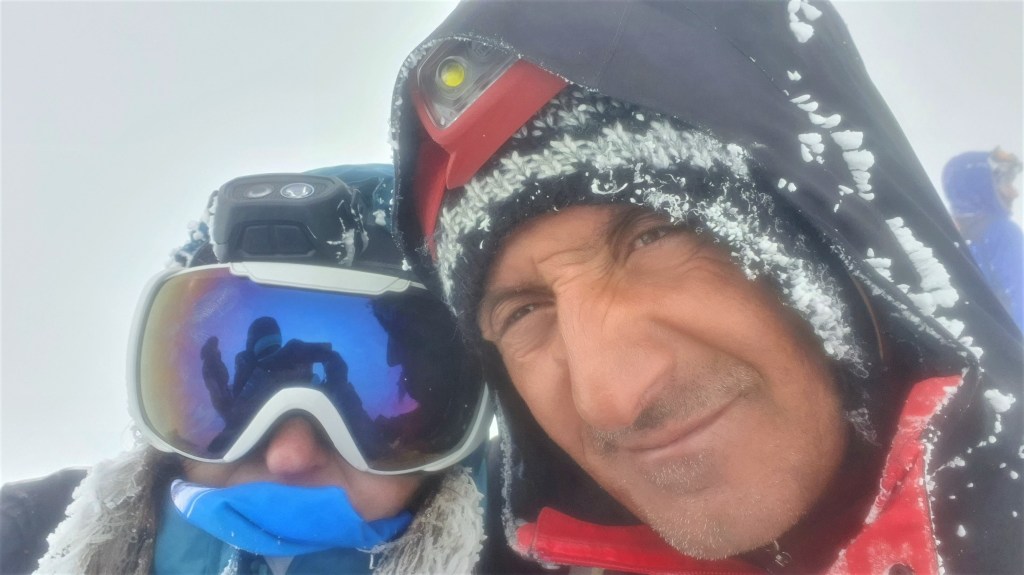
Everyone was in tears. We hugged as misery and happiness flowed down our faces.
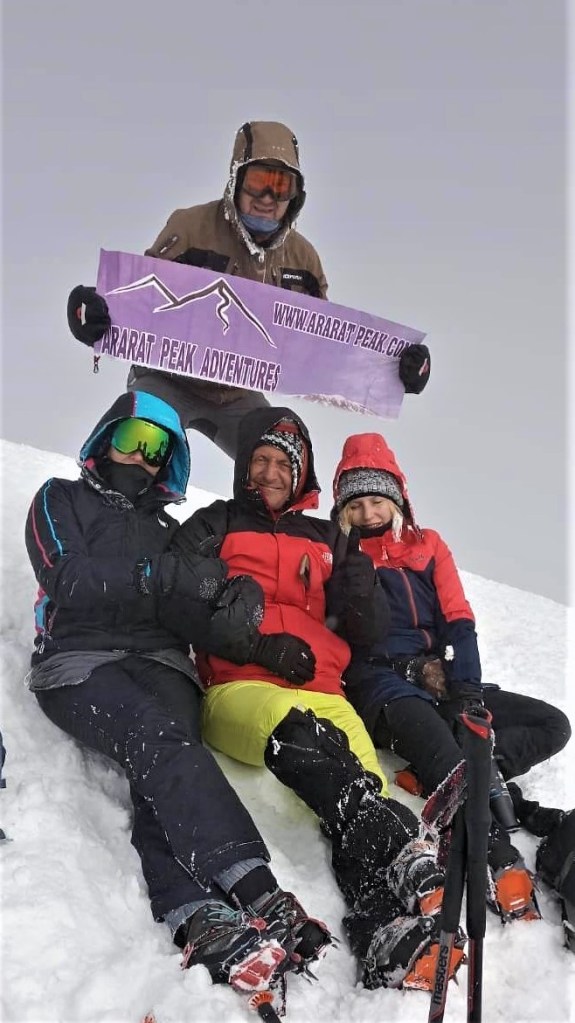
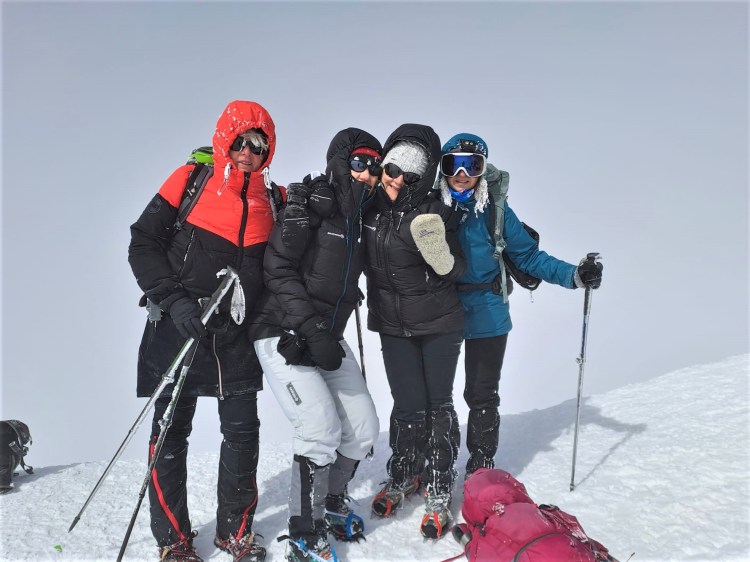
We managed to get a few good photos before Zeki said we needed to hurry up in order to get down the mountain safely and just like that, our 7 hour and 30 minute snowy ascent came to an end.
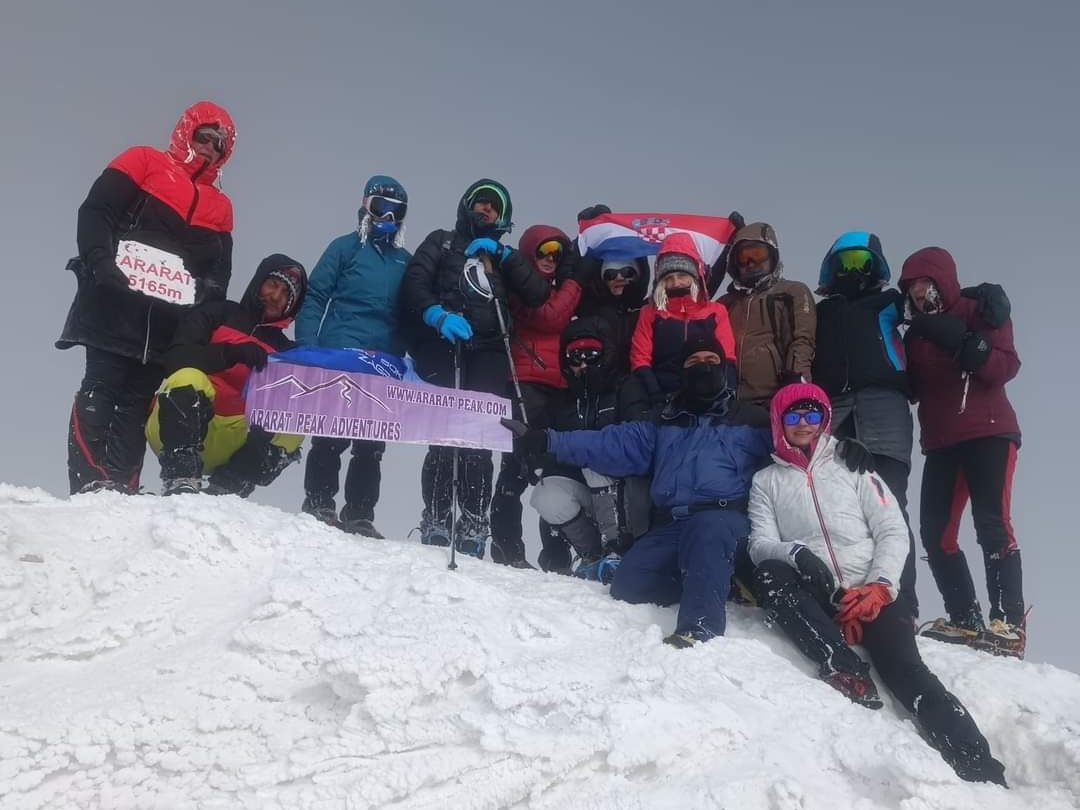
As we got lower the clouds parted and the blue sky brightened our view. One person was lucky enough to be sledded to the camp, while others had to walk. You need to deserve it!
It’s easy to joke now. We descend for 4 hours to the camp, pack the cargo the horses will carry and we walk. The camp is full of new adventurists, including a few from Zagreb and many from Slovenia. Good luck to them!
18:00 We are at the hotel. Finally. We walked for 17 hours without sitting down for more than a moment. A nice hot bath and joint dinner at the hotel, something spicy of course. For dessert, I got us baklava in a bet with Ismail during the descent. Delicious! We say goodbye to our Turkish friends and move on, some towards Iran to Damavand, and some to the crater of the Nemrut volcano because tomorrow is a new day.

P.S. I sent a message to my family: “I’m back, we have all successfully climbed and descended from Ararat. It was the most difficult mountaineering experience in my life and please if I ever get an idea like this again, do everything you can to prevent it.” Due to the weak WiFi, the message didn’t get to them until about 4 a.m. By then I had already slept and sent some photos to our family group chat and my husband woke up and called me: “So heights like Kilimanjaro or Himalaya are not longer of interest to you?”, he asked and he was met with silence on my end…
In the crater of the volcano Nemrut

We have breakfast at the hotel. “What’s wrong with your nose? You look like you came from the Himalaya,” is a common comment. The cold has taken it’s toll. Our faces are red, our noses are even worse, and our lips are chapped and swollen. “Look how big my mouth is!”, J. shows me. “It’s like you have lip filler and permanent make up. You look great!” – “Well, yes. I will come to climb Ararat next year again, it’s cheaper than filler!”, she’s funny all morning.
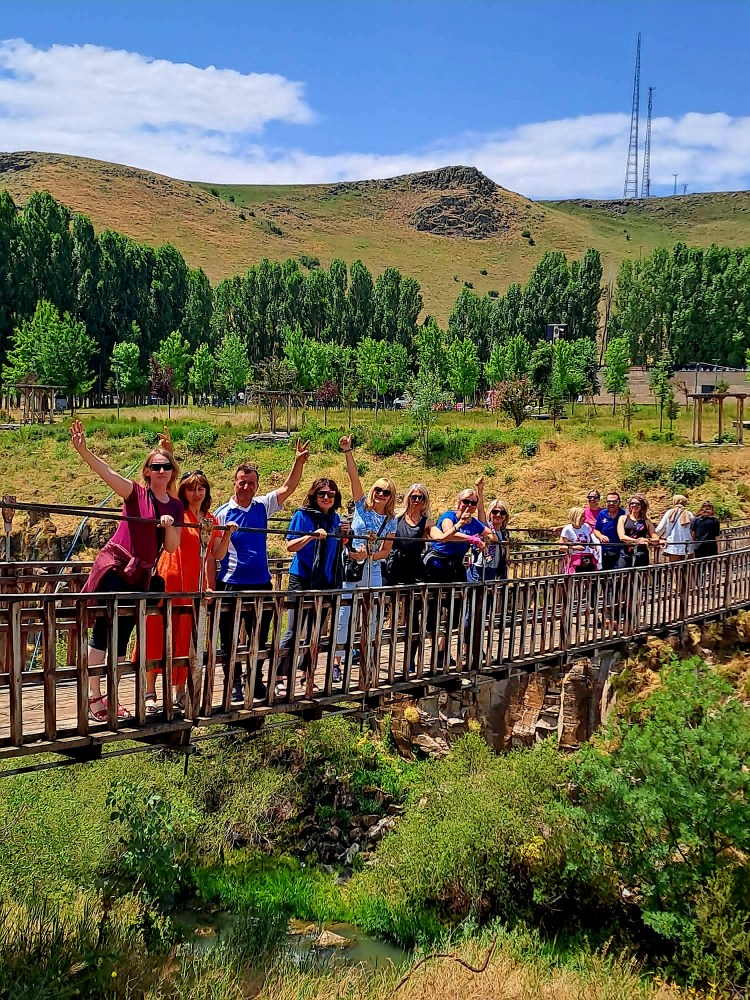
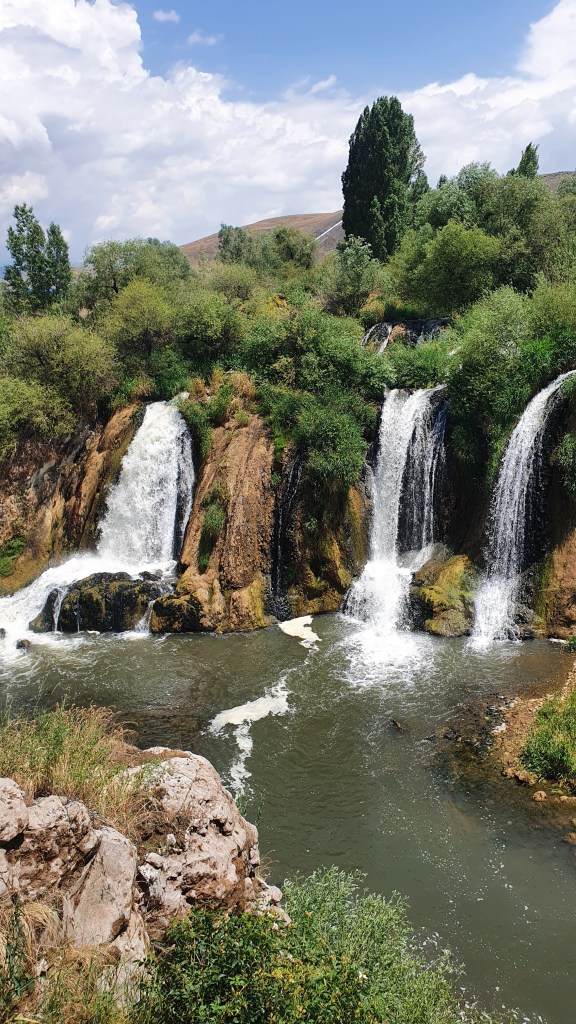
We left our hiking equipment at the hotel, we won’t need it anymore. In our van, we sway to the rhythm of the now well-known and well-received Kurdish music. “Is it traditional or modern music?” I ask Zeki. – “It’s the same music.” After an hour we enter a green oasis of lush vegetation and tall trees. We walk on the suspension bridge over the river, it sways. Water always enchants. Maybe because flowing water symbolizes life and new birth and after Ararat we are reborn, never the same again. Anyway, we cross the bridges and enjoy the special landscape.


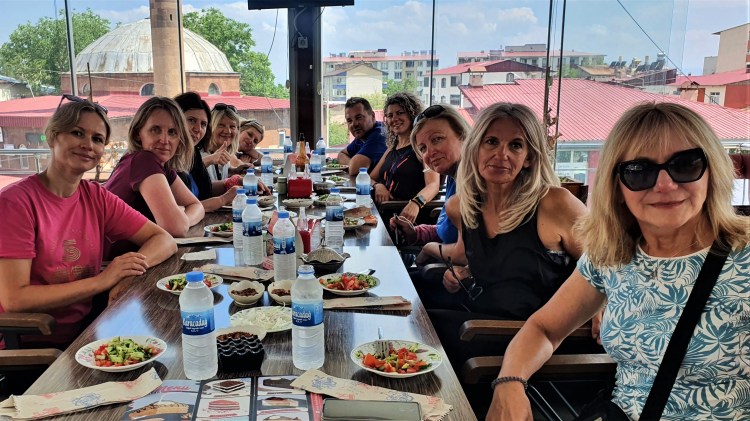
The last town before our camp is an opportunity for lunch. The restaurant overlooks a castle on top of a hill. They offer a variety of kebabs. Kebab refers to a variety of grilled meat impaled on a metal stick. The most common is lamb, followed by chicken and beef. I choose chickpea sauce with rice.
The road leads us over the edge of the crater and down the walls of the volcano to the lake. Well, it sounds unbelievable to me too, but it’s true. We get out of the van at a small lake where our camp will be, at 2.247 meters above sea level. After these heights, I have no idea how we will live at 160 m in Zagreb, and Aleksandra at 0 m by the sea – will that be our only problem with adjusting back to our usual lives?
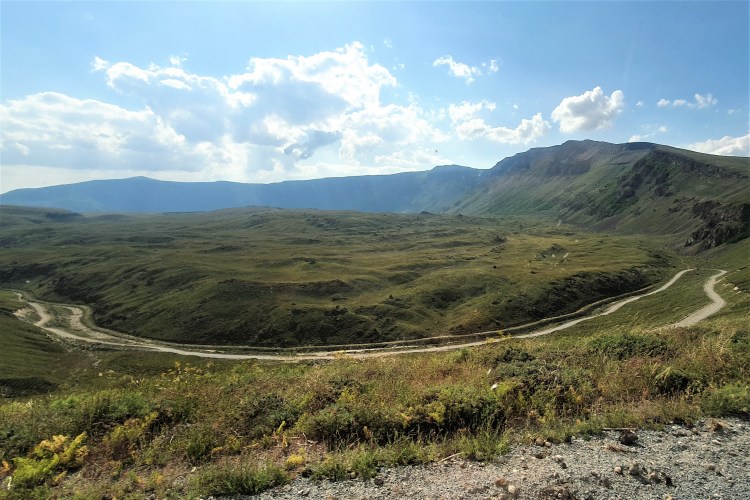
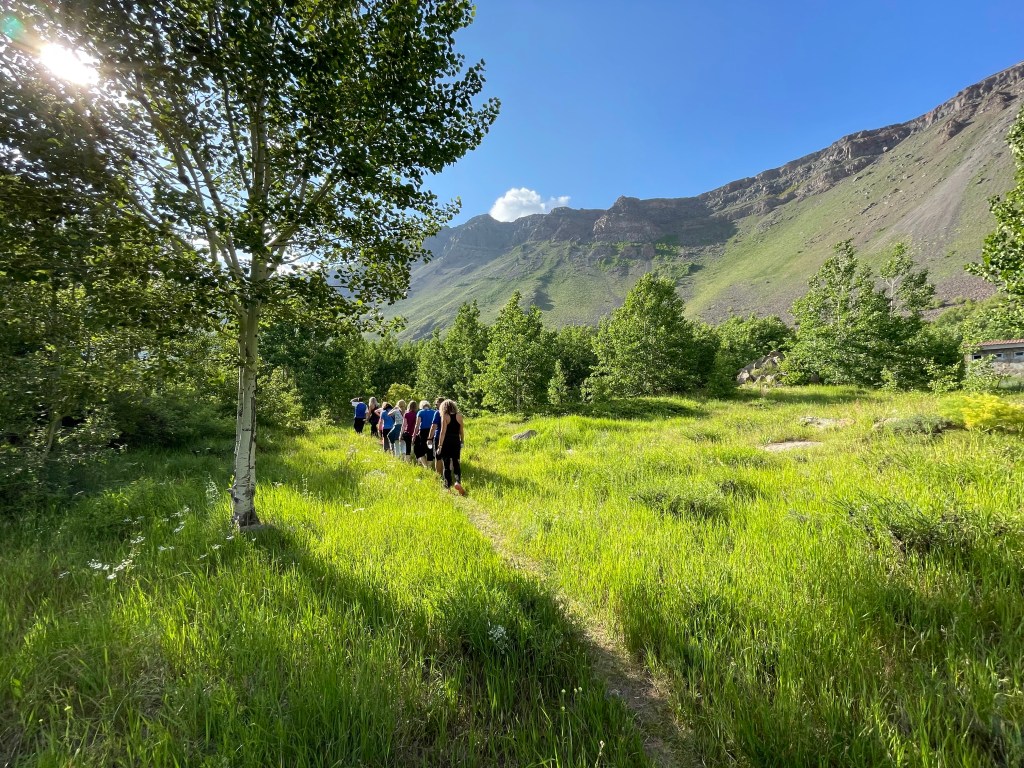
Putting up a tent is getting easier. We don’t need to help out, but every new skill is welcome, so I try to learn a thing or two. Until this adventure and until the age of 52, I had never slept in a tent and yet here I am, night after night, each time in a different place. I’m a little worried about the tall grass, the possibility of slithering animals. The nature here is magnificent. Green lake, green grass and the crater walls rising irregularly and high above our heads.
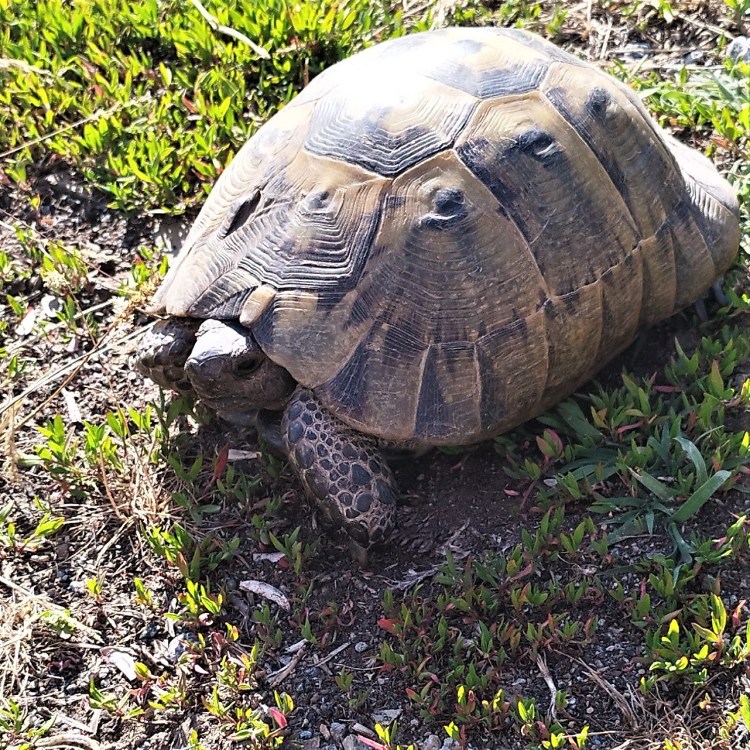
“Let’s go, let’s go!” Zeki invites us on a walk. Something is curled up in the grass. I jump. Oh, a turtle! It is fine. We walk along a road. Three little bears retire from the edge of the forest away from us. Oh, is this real? Yes, most of us saw the same, we smile excitedly still in disbelief.
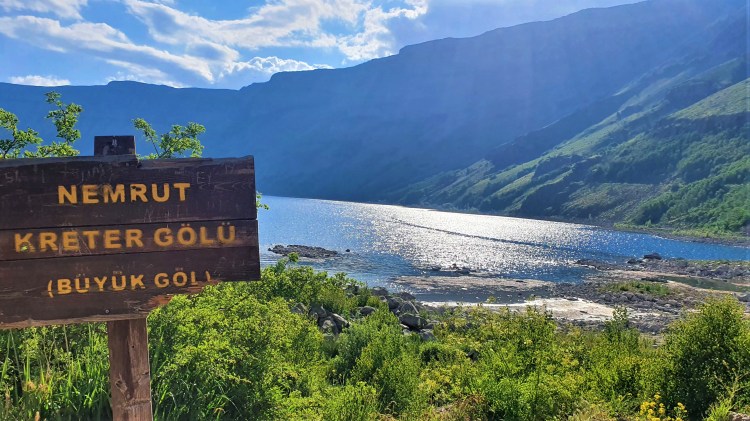
We are on a huge lake with an area of approximately 12 km2 and an average depth of 100 m, which covers the western half of the crater. It is a protected natural monument in the heart of one of the largest craters in the world. We take off our shoes and wet our feet. While gazing into the distance, conversation flows easily and we indulge in light philosophy about enjoying in the moment. The sun is setting, and dinner is coming, so we return to our camp. Just one snake encountered on the way there.
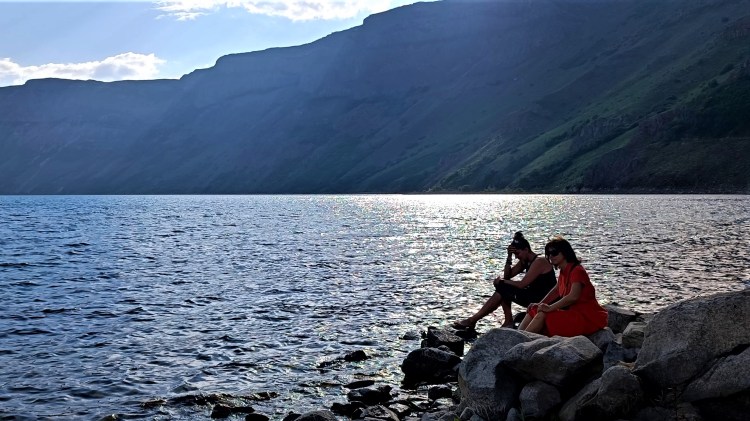
Today we’re having dinner under the night sky. Mushrooms, peppers, tomatoes and chicken are grilled and the smell spreads through the open space at twilight. Zeki brings me a hot wing: “You must try it!”. For dessert cherries, cantaloupe and watermelon. We go collect more branches for the fire.

Night falls, the fire is lit, music from the speakers floods the lake. Alexa’s suggestion of Plavi Safir as a shared melody is a hit. We continue to indulge in Kurdish music, we know the steps by now, the lyrics we will never know. We danced like there was no tomorrow. “What kind of tea did you make for us?”, I ask Zeki, the other two guides do not speak English, “Look, we are all laughing like crazy!” – “Just regular tea like every day,” he answers with a laugh and goes to get more branches.
“We saw a bear again. Tell people not to leave the camp if they go to the toilet at night,” he informs me. As soon as I told them about it, a bear cub passed us, heading towards the lake. “Now he will go to his mother and tell her that we didn’t give him anything to eat!”, jokes Jasminka, “Go and eat them, little bear, get justice”, we are talking nonsense.
Lili and Marina head towards the tent and notice it is swaying. There is also an unusual silhouette, someone is inside the tent. Mama bear has arrived. She tore up one of the tents, entered inside, took the sweets from one backpack, discarded the candy wrappers a few meters from the tent and left. Surely enough, it was Jasminka’s backpack.

It’s extra exciting for us and extremely funny, but not really for our hosts: “This is no longer a safe place, you can’t sleep there. What do you think?” – “I would like to just sleep in the van.” We agreed to pack the tents and transfer everything by van a few kilometres further to a higher altitude where there are no bears. “So where there are no bears, only wolves?”, everything is still funny to me. They say that this has never happened to them before and I had to convince them that we don’t hold anything against them, that we know that nature belongs to animals, and that we are just guests and very lucky guests at that, for having had the opportunity to see bears. “If you say so.”, Zeki accepts it with a heavy heart. We put up the tents again at another place at midnight. Well, let me hear one more time that New Year’s Eve is the craziest night of the year!
Of course I didn’t sleep, but I reached for the Praxiten too late and in the morning I was a different person. “No more pills for you!”, Sandra is strict. After breakfast, we flutter through the grassy landscape uphill towards the edge of the crater.

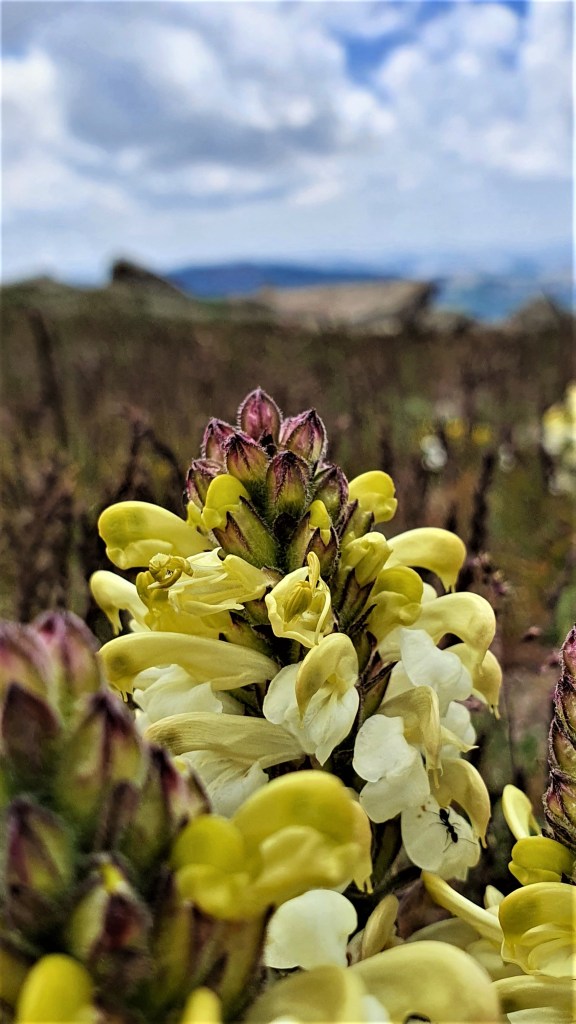
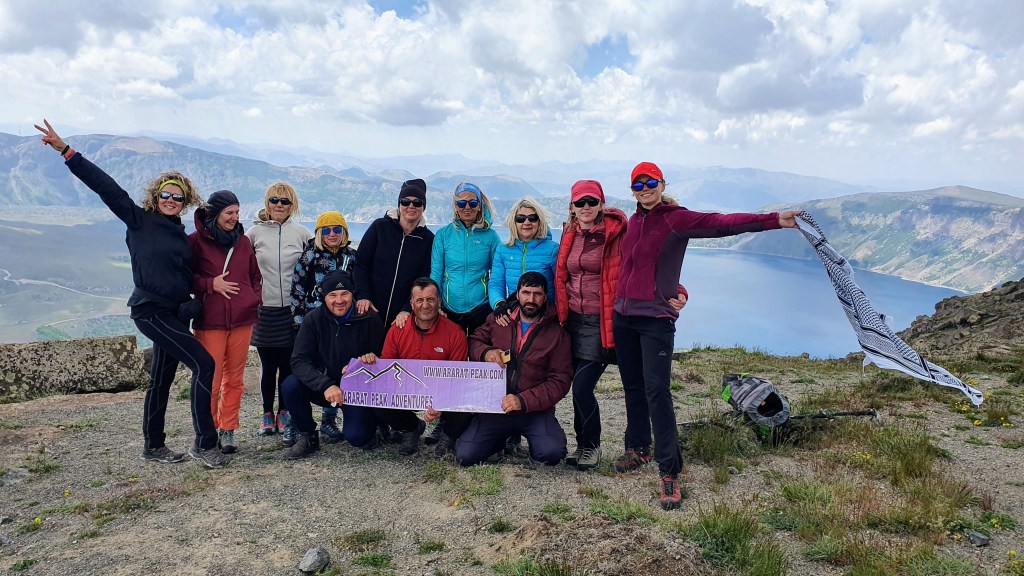
Colorful bushes of flowers are blooming and I believe I can fly is playing in my head. I feel free, but actually only my hands are free because I didn’t take the walking sticks. Feeling happy because we’re walking through harmless flower meadows and there are no bears in sight. The view of Lake Nemrut, where we spent yesterday afternoon, was like the cover of a National Geographic magazine. I ask Zeki if we can make a full circle around the crater. “We can, but we need two days for that.” It’s not happening.
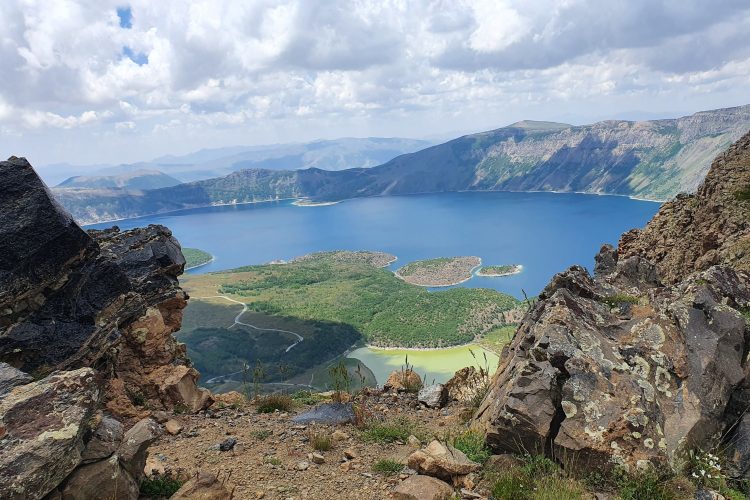
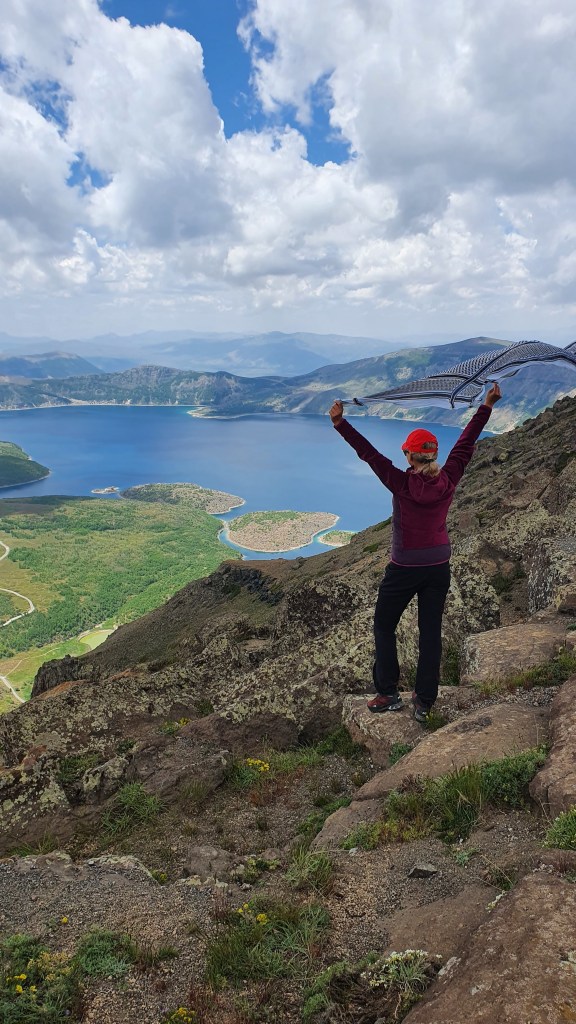
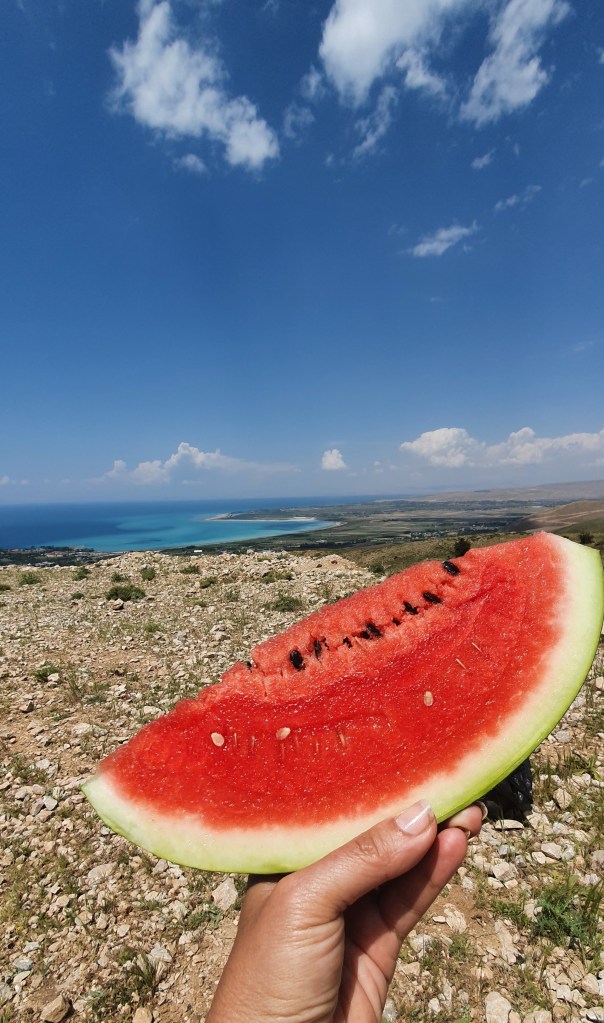
You can clearly see the edge of the crater and the lake that occupies almost half of the surface. We return the same way we came. Next to the van, Zeki’s brother is waiting for us with a delicious watermelon, yummy!

Then we drive along the largest lake in Turkey, Van Lake. It is 119 km long, 451 m deep at the deepest part, and it is located at an altitude of 1.640 m above sea level. The lake is salty and sour, it does not freeze and only one type of fish lives in it – the mullet and it lives only here. It swims upstream in freshwater rivers to lay eggs and returns when it reaches full maturity. You can eat them in nearby restaurants.
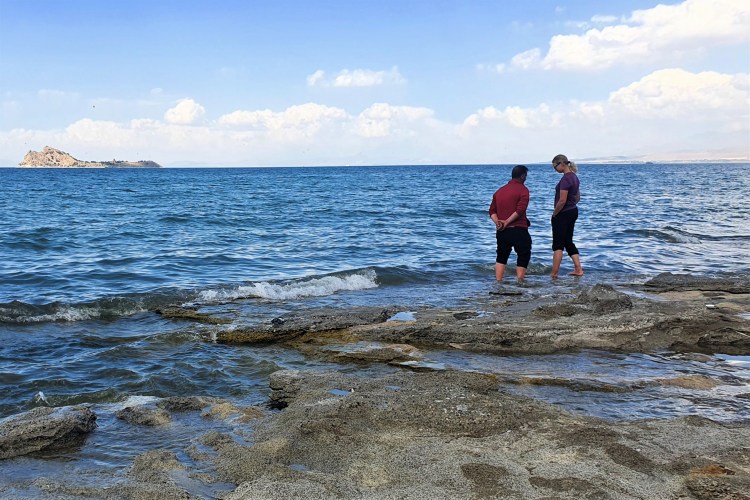
“You can swim here!”, suggests Zeki, but it’s not appealing to us, so we just dip our feet like yesterday. Hm, he actually suggests a swim for us every day. I wonder if he’s trying to tell us something?
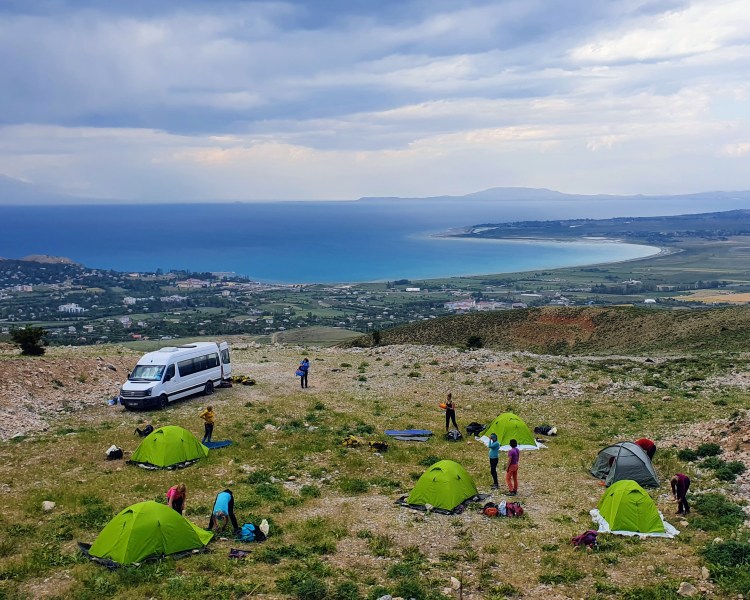
That’s not all for today either! We are driving to a new destination – a camp above the city. Marina has been eager to eat menemen for days. “Do you want to go to a restaurant or eat at the camp?” asks Zeki. We answer in unison – camp.
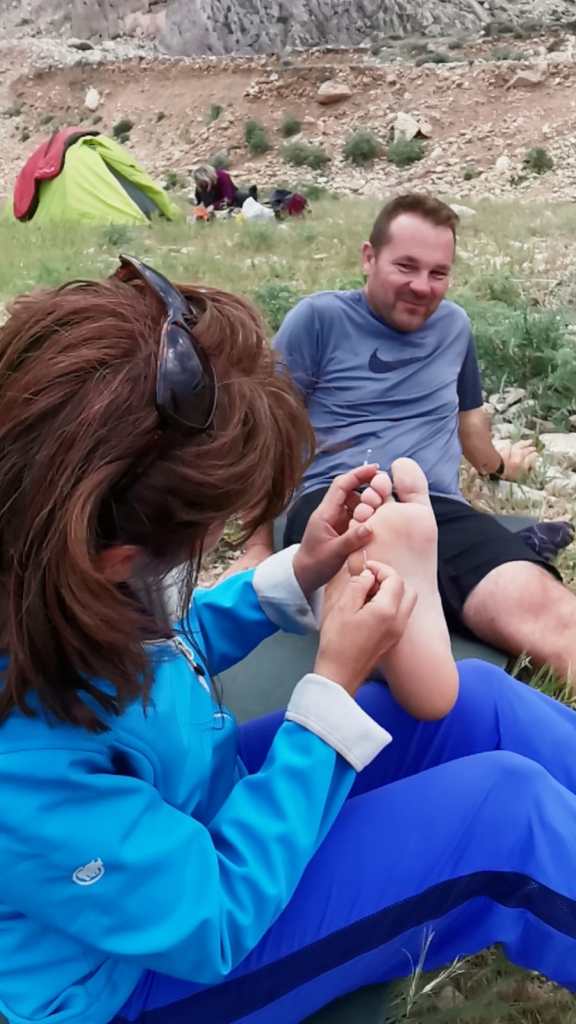
Tihi has a thorn stuck in the sole of his foot. “I have a needle, maybe I can take it out.” – “Wanna go to your place or my place?” Already having the needle in my hand, I rethread through my two euro-coin-sized blisters on my toes for drainage.
Menemen is prepared by sautéeing vegetables (onions, peppers and tomatoes), then pouring beaten eggs over top and cooking until the eggs are done. It is eaten with bread. I would have said “nothing special” if I hadn’t tried it. The pot that was in the middle is empty, not a crumb is left. We drink Ayran, regularly.
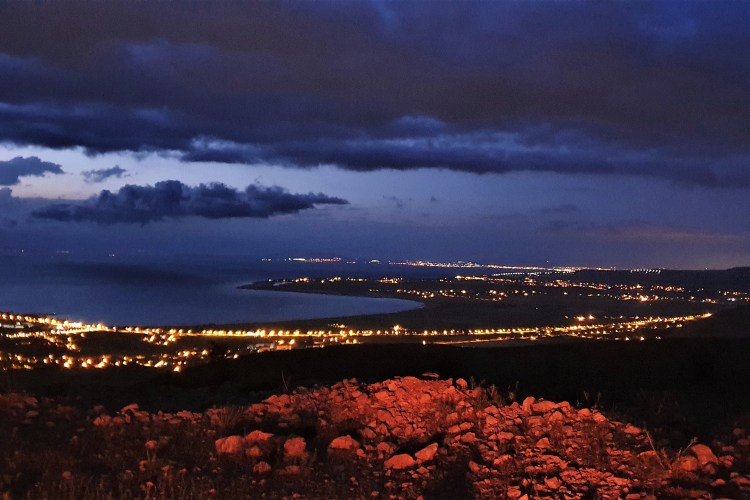
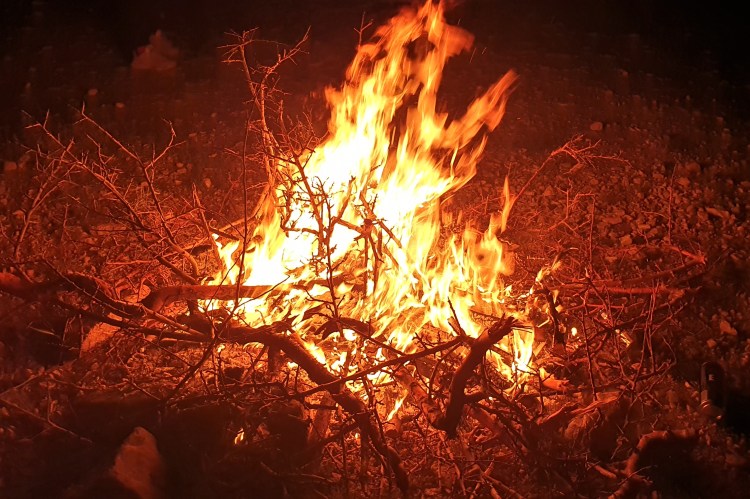
Fire, silence, the night and thousands of stars above us. That’s happiness! And waking up at 4 a.m.
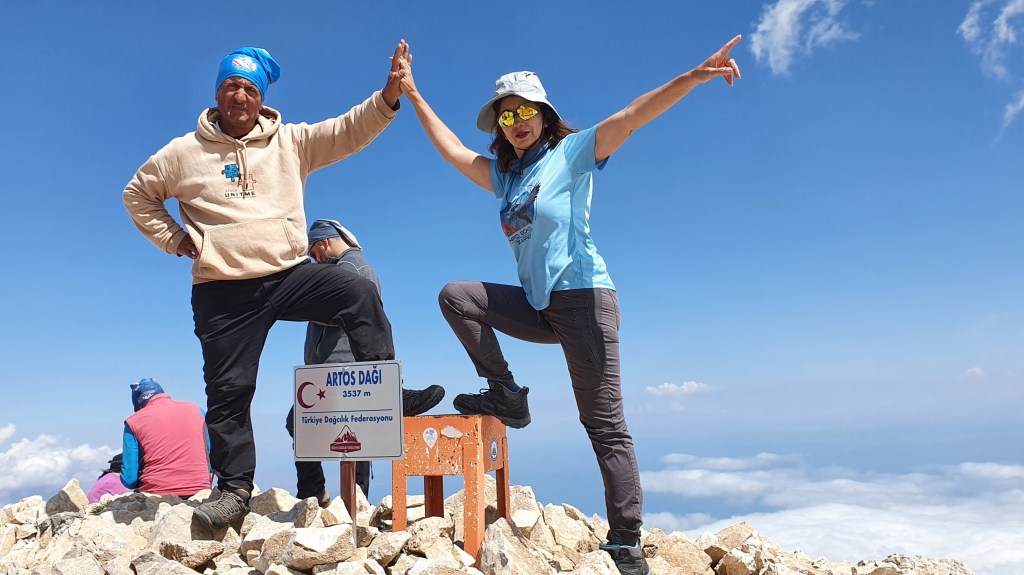
Volcano Artos dagi (3537 m), Turkey

4:00 Getting up. Alarm? No. Our guide Zeki goes around the tents and wakes us all up. Breakfast is already on the table, sorry, on the floor. Boiled eggs, delicious tomatoes, fresh cucumbers, various salty cheeses and much more was served on a red tablecloth. The sun rises and so do I. Morning cup of tea. “I won’t drink tea for three months,” says Tihi, we laugh.
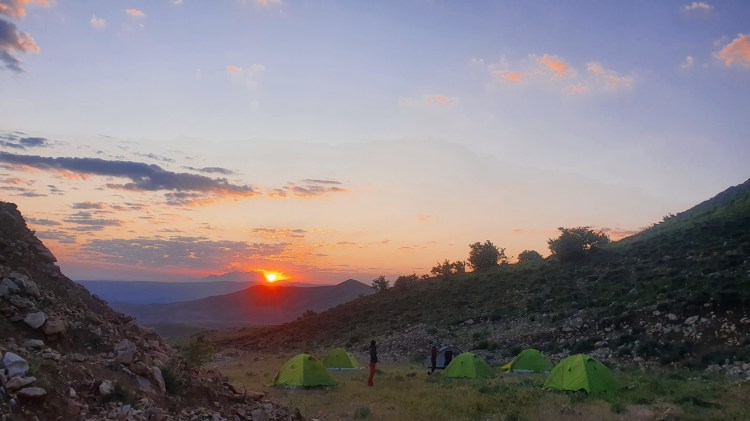
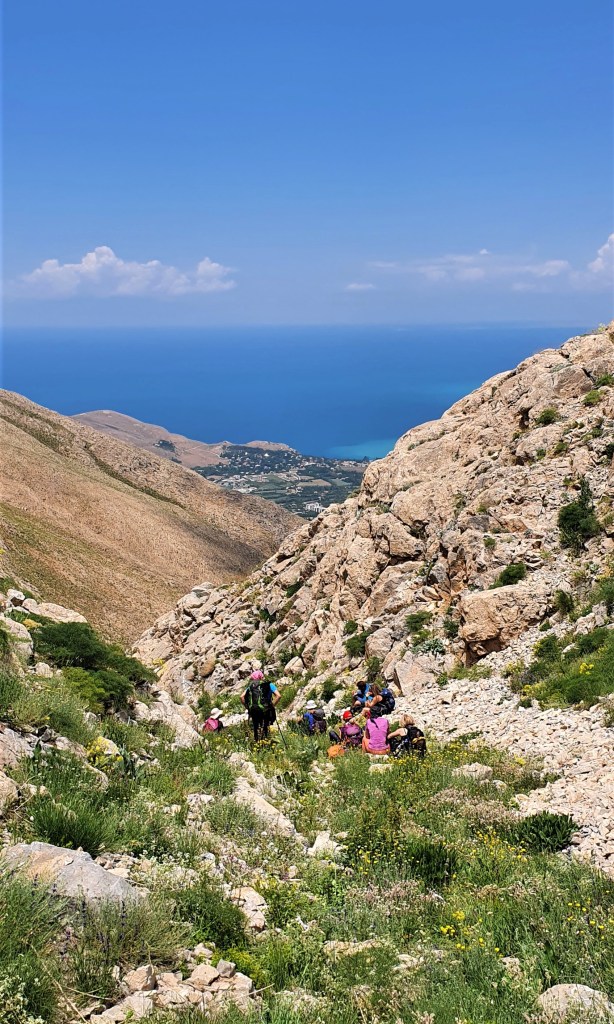
5:00 Today we climb another dormant volcano. The first was Ararat, the second Nemrut and today Artos. The path starts at our camp at 2.050 m above sea level. Path may not be the best term – we walk straight up the canyon without the possibility of turning around. We stumble on rough, unstable stones and I saw only one path marker, it was an arrow on a stone four days ago on Ararat. Looking ahead is tricky. It seems that we see the end of the canyon, and then there is a continuation and so on and so forth. We leave behind us Van Lake and the bay at the foot of our camp. We sat down after 1 hour and 30 minutes. A herd of sheep grazes high up on the glade. Three light Kangals, the dog breed with the strongest bite in the world, are barking in our direction and we feel threatened. Fortunately, there is a shepherd with them. He talks with Zeki in Kurdish. “They’re arranging tea for us when we get upstairs,” jokes Neva. “He invited us for tea, but we can’t come because we’re going in the opposite direction,” Zeki translates to me at the same time. Well done, Neva! “Shepherds live in the mountains and every few days one comes down to the city to get groceries,” he adds.
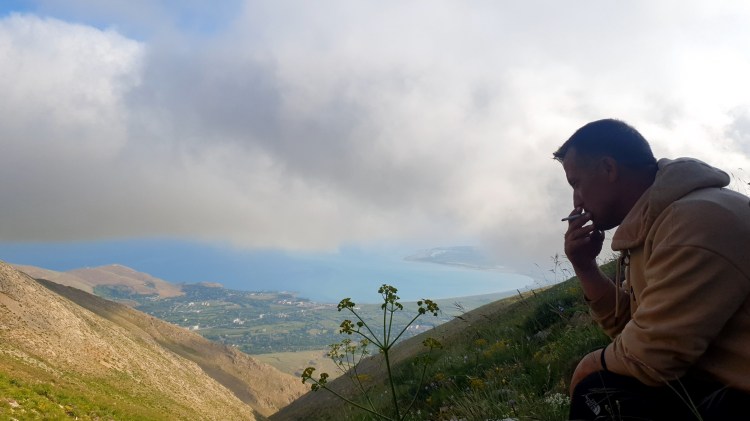
We came out of the canyon to an area of surprisingly lush vegetation. A stony expanse of flowering bushes follows. There are as many flowers as there are hidden thorns. We overcome the physically challenging ascent in serpentine movements to reduce the hillside. Every break is wonderful, because well, it’s a break, but also each one is special. They help you experience the ambience better, and if they were too frequent they would lose their uniqueness.

I have never walked in an area like this before. The ascent is slight, but difficult. The sides of the hills are strewn with pebbles like a pebble beach. The top is within reach, but elusive, far away. I stop to look back – the clouds play with us and decorate our day, but they are stranded on the rock towards Van Lake and don’t let us see it. I did not expect such treasure on the climb to 3.537 meters.

9:45 a.m. It’s sunny, spacious and pleasantly warm. Excellent conditions for a photo session on the top.

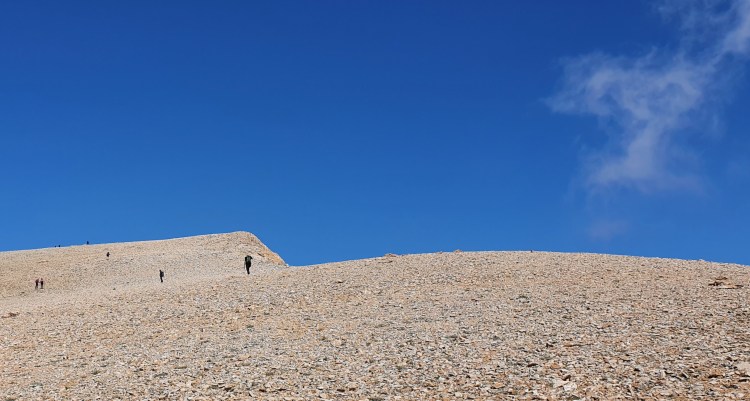
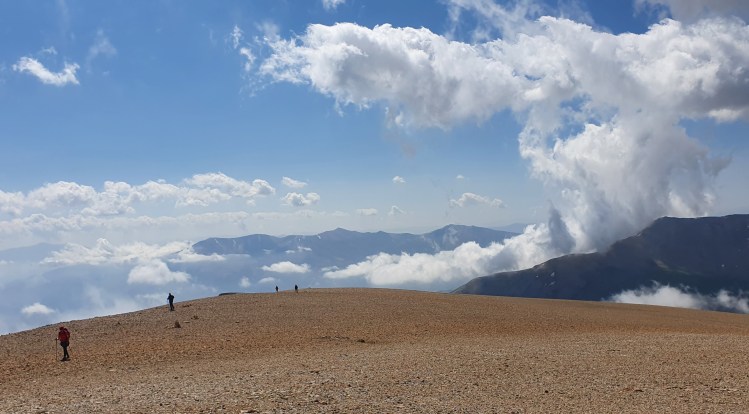
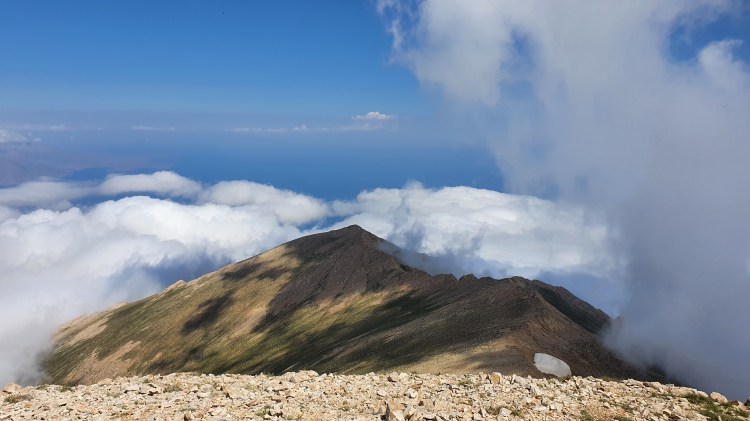
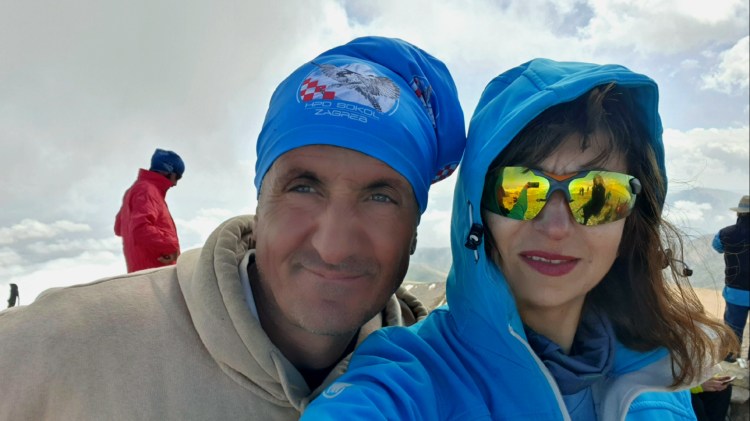
“Your team will be ready for Mount Everest in a year or two,” Zeki says seriously in my ear while congratulating me on the ascent. I’m not sure if he thinks we’re strong enough or crazy enough for such a thing. I thank him for the compliment and for suggesting this wonderful mountain. It was during dinner after climbing Ararat. The plan was Suphan Dagi (4.058 m), but after the surprisingly difficult Ararat, some of us could not accept the more difficult and dangerous peak. “And what is Suphan like to you?” I asked him. “I’m not important. I don’t wanna tell you.” – “But I asked you!” – “O.K. Every time I thank God that everything went well when we all descend happily. It is very dangerous.”, he goes on, “I’m here for you. We can go anywhere you want. We can go to Ararat again, if you want, and swim all day in the lake if you prefer!” he adds. As we have made all decisions together, the same was with this one. We don’t want any troubles on our journey.
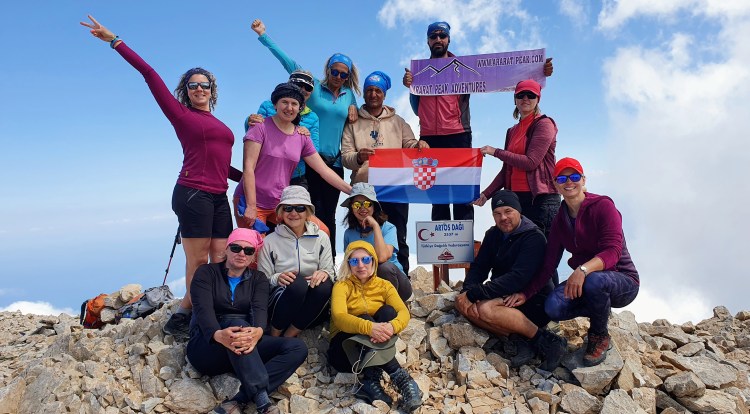
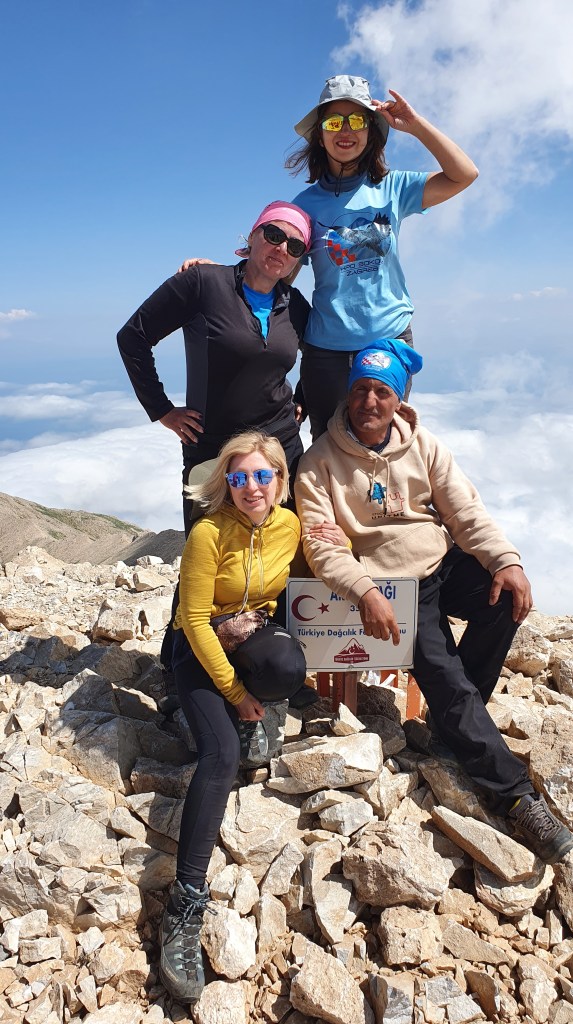
As much as we enjoyed the pebbly ideal and open landscapes whose expanses whisper “Don’t go yet, come closer!” we suffered equally as much looking under our feet at the rolling stones of the canyon that eventually brought us back to the tent, the van and the last slice of watermelon on this trip. It is not like we are tortured at home, but we are not looking forward to returning.
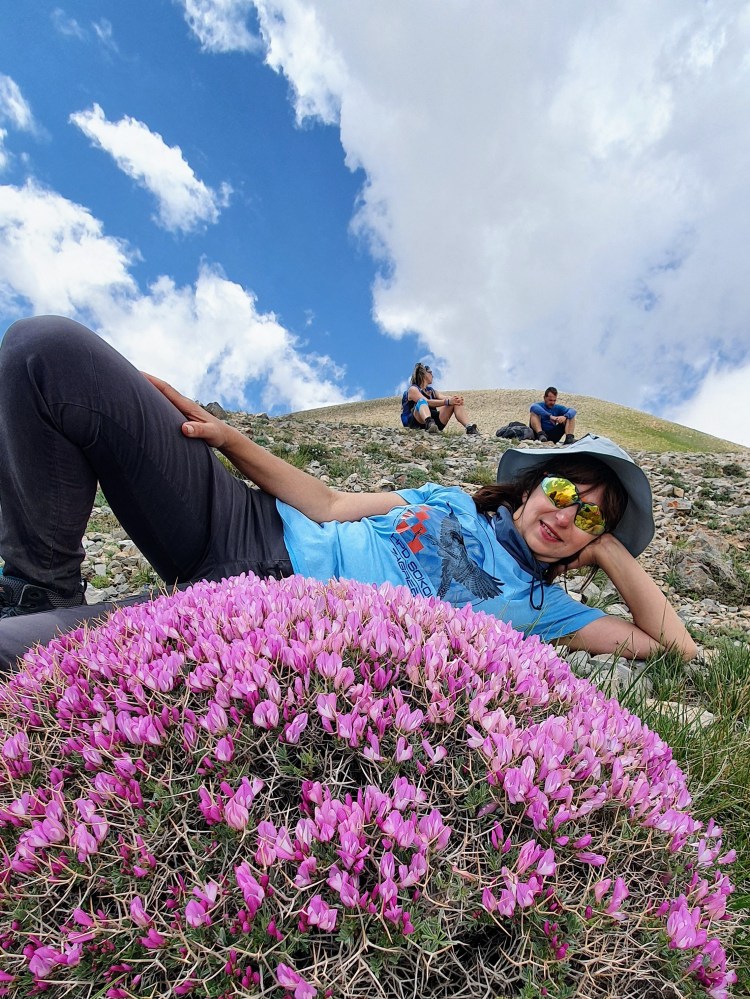
13:20 Transport bags need to be put in order and tents must be folded. Everything is ready, but the chef has not yet said his last word: “Menemen!”. Today the food was prepared a bit more spicy since we have grown more accustomed to it. From up in the sky, the closing scene would be: a red tablecloth, a large empty pot in the middle of it and the ten of us lying around like daisy petals around a pistil – with our hands in the bread pot, collecting the last remnants of the delicacy.
In the van, the atmosphere is traditionally dancing. The girls have already downloaded the hits and we imagine ourselves vacuuming the apartment at home to the rhythm of Kurdish music while practicing the newly learned dance steps, while the other hand waves a dust cloth in the air. Let’s summarize the experience, and we can’t be surprised how phenomenal everything was: the host Zeki and his team, our uniqueness, the successful ascent of Ararat in extremely difficult conditions and the two additional peaks – special and wonderful. Yes, mild sadness is present. The end is near.

We arrived in the city of Van. We want to visit their “bazaar” market, buy something traditional, a souvenir, tea, a bright scarf and listen to the heart of the city. What a mess! First with parking, then in the pedestrian area. Our three guides take great care of us. The shine of oriental jewelry, mugs and scarves calls us in all directions, and I think it was easier for them to be with us at night on the snowy endless of Ararat than here. “Do you have that yellow rope here?” I ask Zeki. Bargaining is present, I see that Zeki is negotiating about my two scarfs, but in Turkish, so I don’t know the details. Of course we want to buy the tea that we drank here every day so that we can bring a touch of adventure into our homes on a rainy Sunday morning.
We returned the sleeping bags, bought T-shirts with the Ararat print from Zeki, handed out tips because they deserved them. Zeki awarded us certificates for the ascent and we sat at the table for dinner, the last dinner.
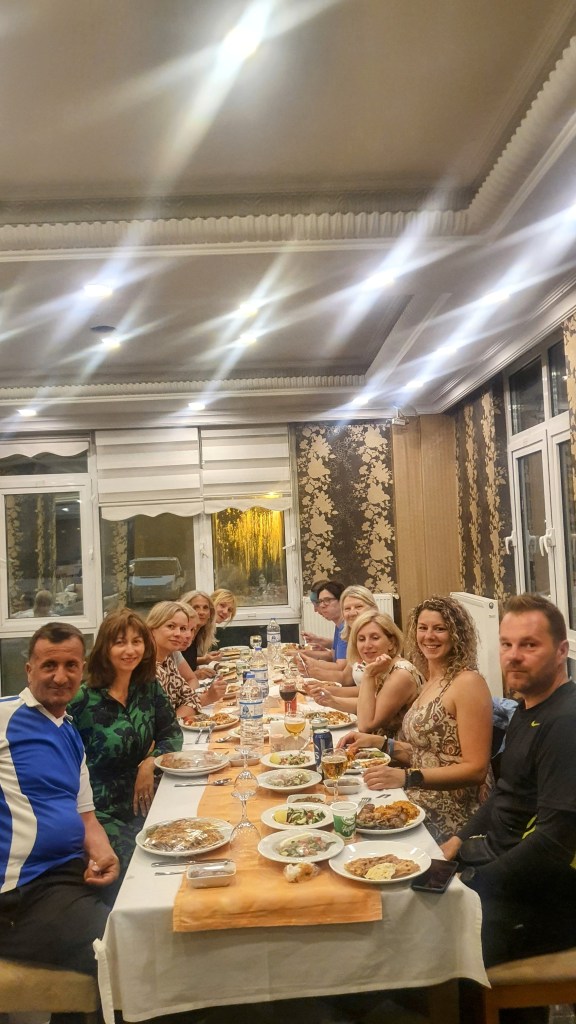
I get up: “I want to say thank you to all of you, and the biggest thanks to Zeki. Without any one of you this would be a completely different story. I’m very happy to share this adventure with all of you, and proud to climb Ararat in these difficult circumstances. We did it!”
“If only we could stay a little longer,” was heard from time to time. Yes, it’s never long enough. There are always more things to see, more excitement to experience, more foods to try. I guess that’s how the first idea about traveling around the world came about. Every end is also a new beginning, so we will see!
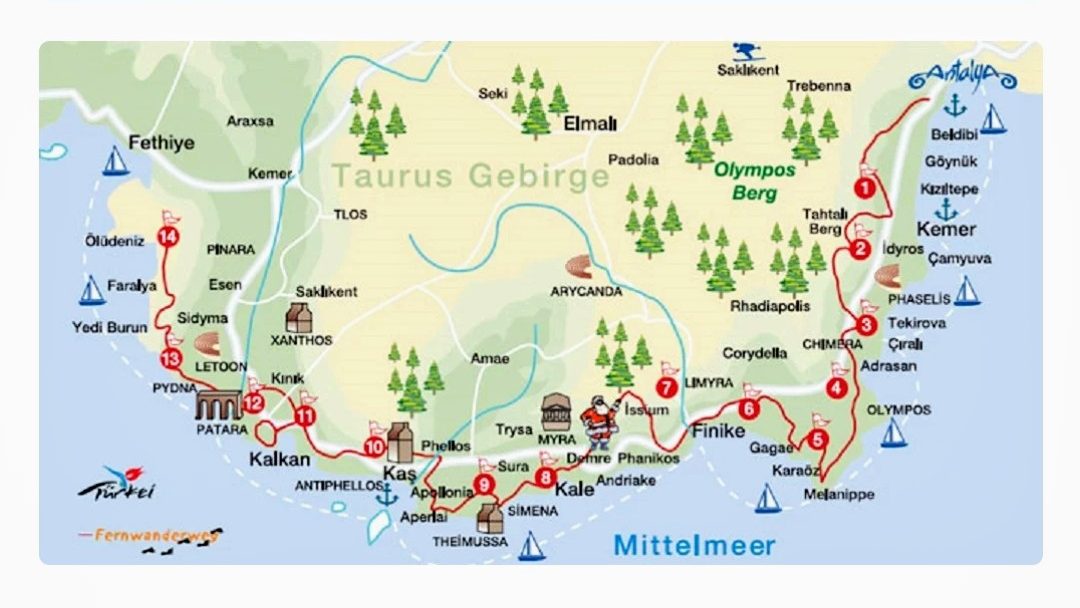
P.S. Maybe next adventure will be Antalya Lycian way trekking in october 9 days? Are you interested in?
 AvanturAna